

RV Water Filter Cartridge Replacement Guide: How Often to Change + Signs It's Time
![[HERO] RV Water Filter Cartridge Replacement Guide: How Often to Change + Signs It's Time](https://cdn.marblism.com/0yjiyVecNBT.webp)
Your RV water filter system is only as good as the cartridges inside it. Over time, cartridges can lose effectiveness, and that may show up as changes in taste, flow, or the amount of sediment getting through.
The good news? Swapping out filter cartridges is one of the easier maintenance tasks you can do, and it can make a noticeable difference in water quality. Whether you're running an Essential, Enhanced, or Elite system from RV Water Filter Store, this guide walks through typical replacement timing, common signs it may be time, and how to change cartridges correctly.
Why Replacing Your RV Water Filter Cartridges Actually Matters
Think of your filter cartridges like a sponge. Over time, they absorb sediment, chlorine, and other contaminants from campground water sources. Eventually, that sponge gets full : and once it does, it can't catch anything else.
A worn-out cartridge can lead to:
- Bad taste and odor sneaking back into your drinking water
- Reduced water pressure throughout your RV
- Sediment slipping through and potentially damaging fixtures or appliances
- Bacterial growth if the cartridge sits too long without replacement
Staying on top of replacements can help keep your water tasting better and your system running smoothly. It’s a small maintenance step that often pays off in day-to-day use.
How Often Should You Replace RV Water Filter Cartridges?
There's no single answer here : it depends on your filter type, how much water you use, and the quality of the water you're filtering. Here’s a general timeline many RVers use as a starting point:
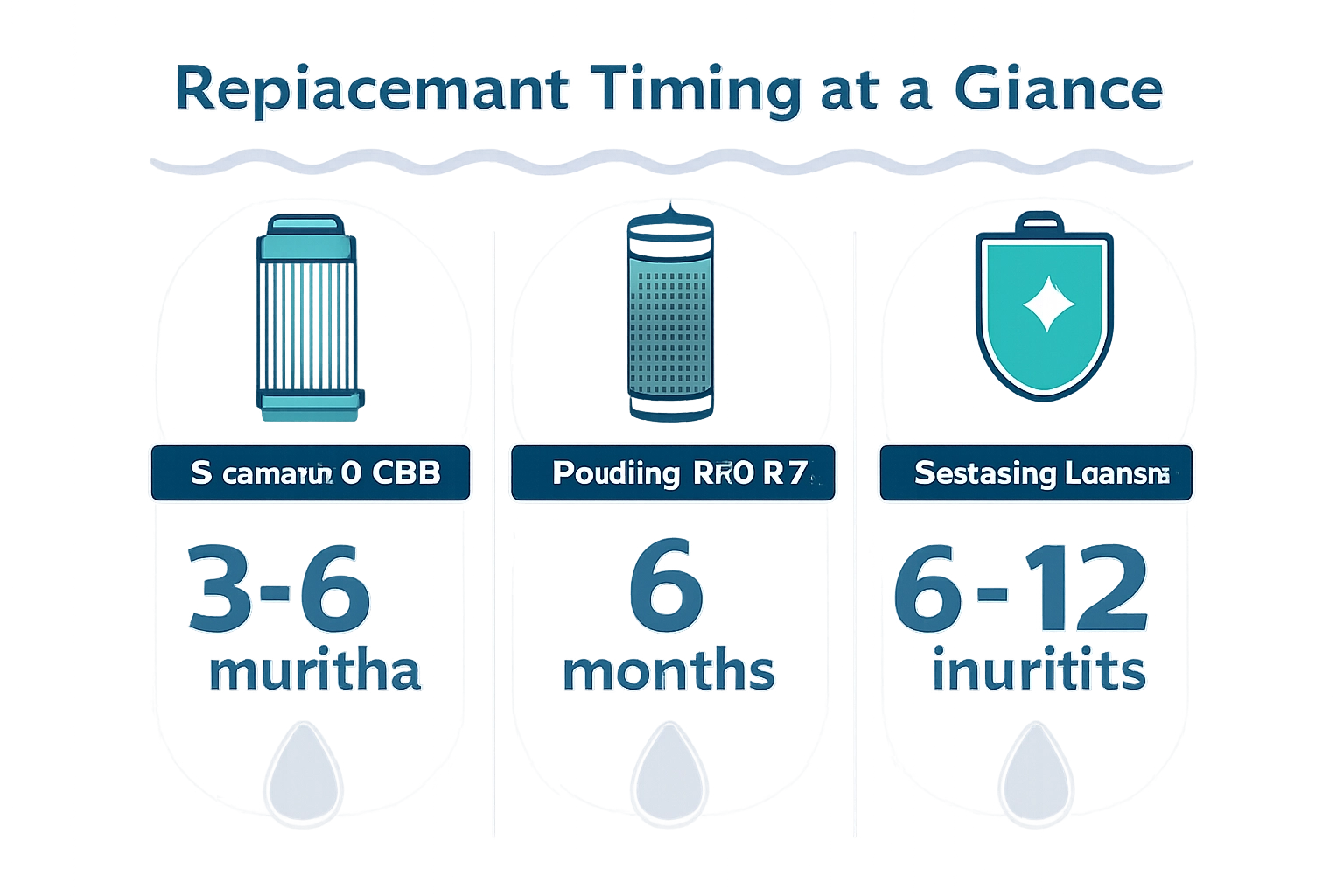
| Filter Type | Recommended Replacement |
|---|---|
| Sediment Filters | Every 3–6 months |
| Carbon Filters | Every 6 months |
| Specialty Filters (virus, iron, etc.) | Every 6–12 months |
Full-timers and heavy users: You’ll often end up replacing on the shorter end of those ranges. If you’re moving between campgrounds with lower-quality water, it may make sense to shorten your schedule.
Weekend warriors: You may be able to land closer to the longer timeframes. Just keep in mind that cartridges can still age while sitting unused, especially in heat.
5 Signs It Might Be Time to Replace Your Filter Cartridge
Don’t rely on the calendar alone. In many cases, your water (and your flow rate) will give you clues. Watch for these common signs:
1. Water Tastes or Smells Off
This is one of the most noticeable signs. If your water starts tasting more like chlorine, has a sulfur smell, or just seems “off,” your carbon stage may be nearing the end of its useful life.
2. Water Flow Has Dropped
Noticed weaker pressure at the faucet or shower? A sediment filter that’s loading up is a common culprit. Trapped debris can restrict flow over time.
3. Visible Particles in the Water
If you’re seeing floaties or cloudiness, your sediment stage may not be catching as much as it used to, or the housing may need cleaning. Replacing the cartridge is often a good next step.
4. It’s Been a While
Even if everything seems fine, going far past the recommended lifespan isn’t ideal. In some situations (especially warm storage), cartridges can become a place where bacteria may grow, particularly if the system sits stagnant.
5. You Just Got Back from Questionable Water
Some campgrounds have tougher water than others. If you’ve been filtering water with a lot of sediment, odor, or discoloration, it may be worth checking your cartridges and replacing sooner than your usual schedule.
Matching the Right Cartridge to Your System
At RV Water Filter Store, our whole-RV filtration systems are designed around straightforward cartridge swaps. Here’s what typically fits each system:
Essential System
Our entry-level setup uses a single high-capacity cartridge that handles sediment and helps improve taste. It can be a good fit for occasional travelers who want simpler maintenance.
Replacement cartridge: Standard sediment/carbon combo filter
Enhanced System
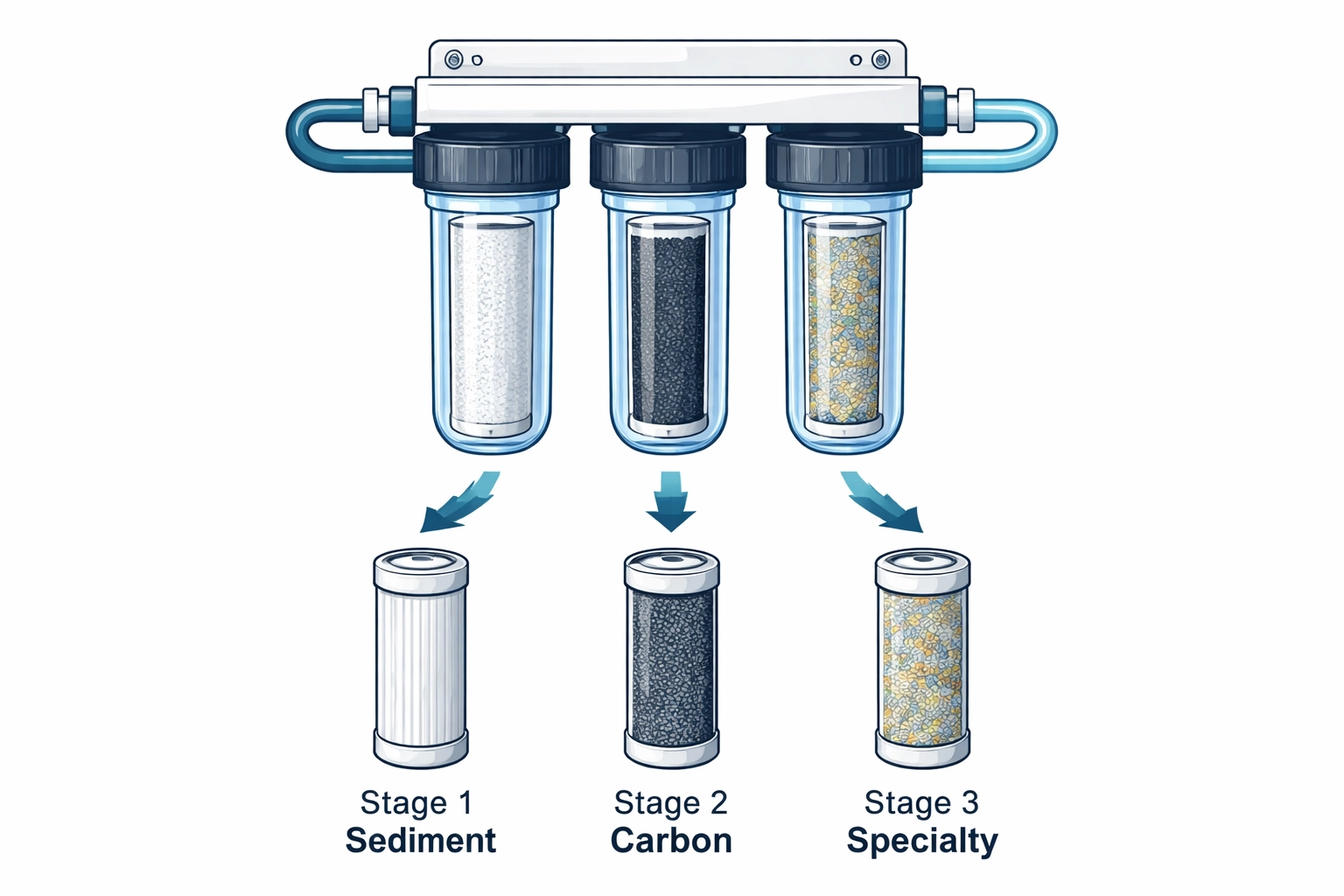
This dual-canister system gives you dedicated sediment filtration plus carbon filtration for taste and odor. In many setups, separating the stages can help with flow and can extend cartridge life since each filter handles its own job.
Replacement cartridges:
- Stage 1: Sediment filter (like the PR-1 Jumbo Micron Sediment Filter)
- Stage 2: Carbon block filter
Elite System (Triple Canister)
Our most comprehensive whole-RV option. The Triple Canister Water Filtration System adds a third stage for specialized filtration : whether that’s extra sediment protection, iron reduction, or virus-rated filtration with something like the Virus Hero 0.2 Micron Filter, depending on your water concerns.
Replacement cartridges:
- Stage 1: Sediment pre-filter
- Stage 2: Carbon block
- Stage 3: Specialty cartridge (based on your water concerns)
How to Replace Your RV Water Filter Cartridges (Step-by-Step)
In many RVs, this is a quick job (often around 10 minutes). Here’s how to do it:
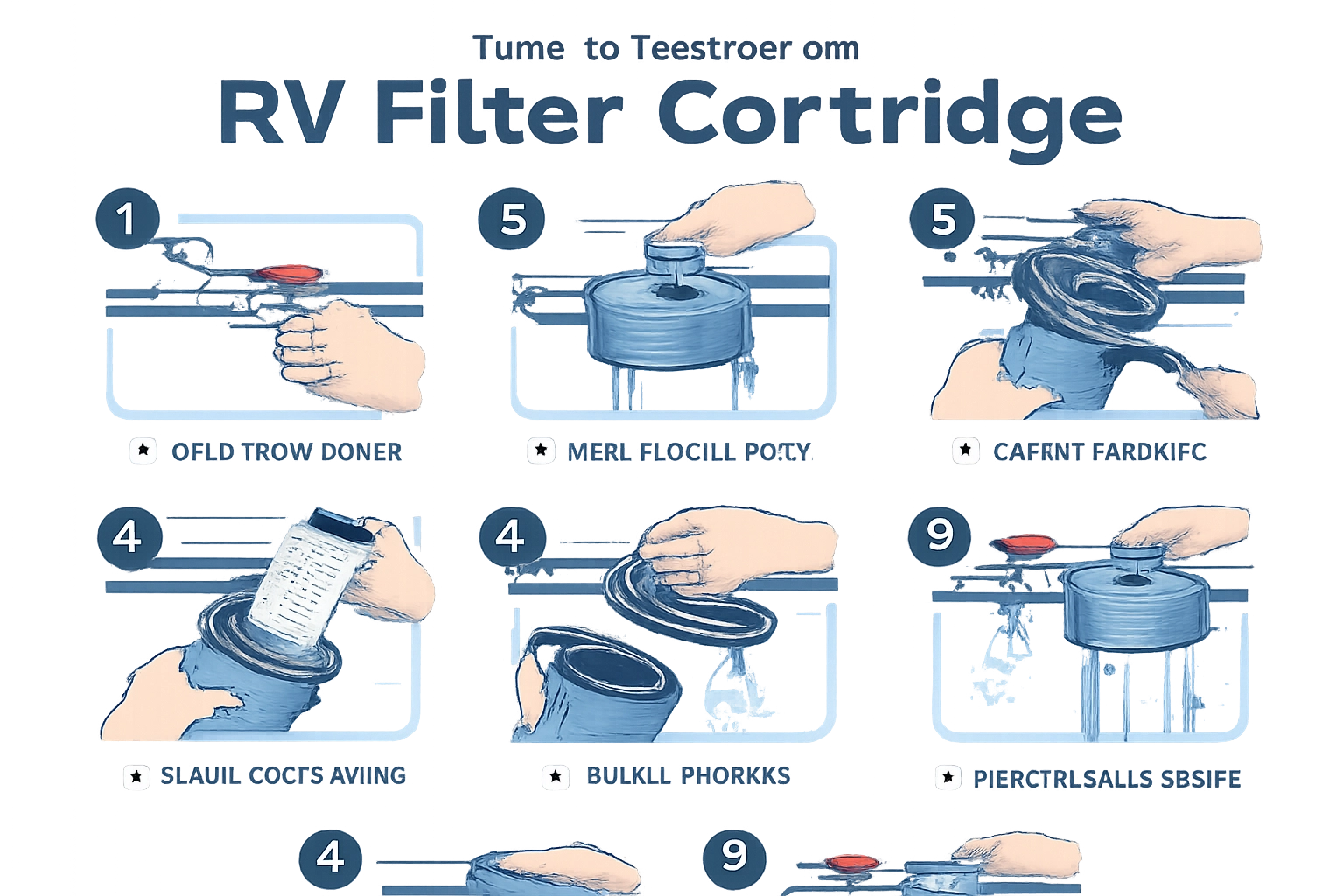
Step 1: Shut Off the Water Supply
Turn off your water pump (if using the onboard tank) or disconnect from the campground hookup. This prevents water from spraying everywhere when you open the housing.
Step 2: Relieve the Pressure
Open a faucet inside the RV to release any pressure in the lines. You can also use the pressure relief button on your filter housing if it has one.
Step 3: Remove the Filter Housing
Use a filter wrench to unscrew the housing canister. Turn counterclockwise. Have a towel or bucket ready : some water will spill out.
Step 4: Remove the Old Cartridge
Pull out the old cartridge and inspect it. (You'll probably be surprised how dirty it looks.) Dispose of it properly.
Step 5: Clean the Housing
Wipe down the inside of the canister with a clean cloth. Check the O-ring for cracks or debris. A little silicone lubricant on the O-ring helps maintain a good seal.
Step 6: Insert the New Cartridge
Drop in the fresh cartridge, making sure it seats properly. Don't force it.
Step 7: Reassemble and Test
Screw the housing back on (hand-tight plus a quarter turn with the wrench). Turn the water back on and check for leaks. Run water through the system for 2–3 minutes to flush out any carbon fines before drinking.
Don't Forget to Sanitize
If you're storing your RV for an extended period or notice any funky smells coming from the system, sanitizing the setup can help. A diluted bleach solution (about ¼ cup per 15 gallons of tank capacity) run through the system : then thoroughly flushed : can help reduce bacteria and freshen things up.
Pro tip: Always remove your filter cartridges before sanitizing. The bleach can damage them.
Storing Replacement Cartridges
Keep spare cartridges in a cool, dry place. Avoid storing them in direct sunlight or anywhere they might freeze. Many cartridges have a shelf life of 2–3 years unopened, so keeping a backup can be convenient : especially if you're headed somewhere remote.
Optional Convenience: Subscribe & Save
If you’d rather not keep track of reorder dates, our Subscribe & Save option can ship replacement cartridges on a schedule you choose. You can adjust, pause, or cancel anytime, and it can be a simple way to keep spares on hand.
Trusted Since 1992
At RV Water Filter Store, we've been helping RVers dial in better water for over 30 years. Every filter cartridge we sell ships free to the contiguous 48 states, and our team can help you confirm fitment or choose a cartridge based on your water conditions.
If you want a second set of eyes on what you need, contact us (we’re happy to help.)


