


Do You Really Need an Under Sink Water Filter for Your RV? Here's the Truth
![[HERO] Do You Really Need an Under Sink Water Filter for Your RV? Here's the Truth](https://cdn.marblism.com/O3eGJWLkJ7c.webp)
If you've spent any time in RV forums or chatting with fellow travelers at a campground, you've probably heard this question come up: "I already have an inline filter on my hose: do I really need an under-sink filter too?"
It's a fair question. After all, no one wants to buy gear they don't actually need. And with limited space in an RV, every piece of equipment has to earn its spot.
The honest answer? It depends. An under-sink water filter isn't essential for every RVer, but for some travel styles and water quality concerns, it can make a noticeable difference in your daily life on the road.
Let's break it all down so you can figure out what actually makes sense for your rig and your adventures.
The Difference Between "Working Water" and "Drinking Water"
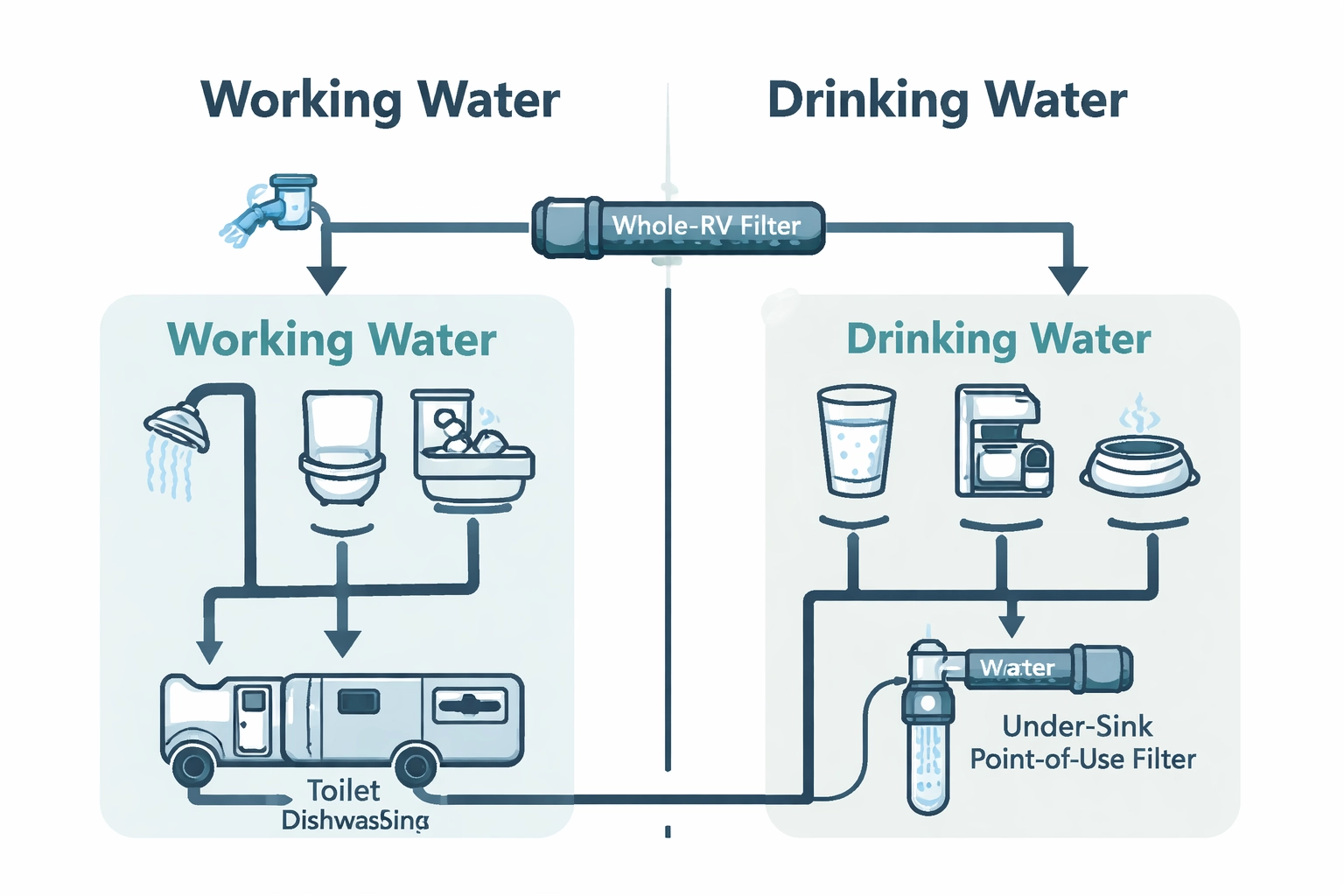
Before we dive into under-sink filters specifically, it helps to understand a concept that makes RV water filtration a lot clearer: the difference between working water and drinking water.
Working water is everything that flows through your RV's plumbing system: the water you use to shower, flush toilets, wash dishes, and run through your water heater. For working water, you typically want to remove sediment, reduce chlorine, and protect your plumbing from scale and debris. An inline filter or whole-RV canister system handles this job well.
Drinking water is the water you actually put in your body: what you drink, cook with, make coffee with, and use to fill the dog's bowl. For drinking water, you might want an extra level of filtration that goes beyond sediment and chlorine, especially if you're concerned about taste, odor, or specific contaminants.
Here's where under-sink filters come in. They're designed as point-of-use systems, meaning they filter water right at the tap where you're actually consuming it. Think of them as a dedicated filtration station for your drinking water, separate from your whole-RV system.
What Does an Under-Sink Water Filter Actually Do?
An under-sink filter sits (you guessed it) under your kitchen sink and connects to a dedicated faucet or your existing cold water line. When you turn on the tap, water passes through one or more filter cartridges before reaching your glass.
Depending on the system, an under-sink filter can:
- Remove finer sediment that might pass through an inline filter
- Reduce chlorine taste and odor more effectively than a single-stage system
- Target specific contaminants like heavy metals, VOCs, or bacteria (depending on the cartridge type)
- Improve water clarity and taste for a more pleasant drinking experience
The key difference between an under-sink system and an inline hose filter is filtration capacity. Under-sink systems typically have larger cartridges, more filtration stages, and slower flow rates: all of which translate to more thorough filtration for the water you're actually consuming.
Understanding Filtration Stages: Sediment, Carbon, and Beyond
Not all filters are created equal, and understanding what each type does can help you decide how much filtration you actually need.
Sediment Filtration
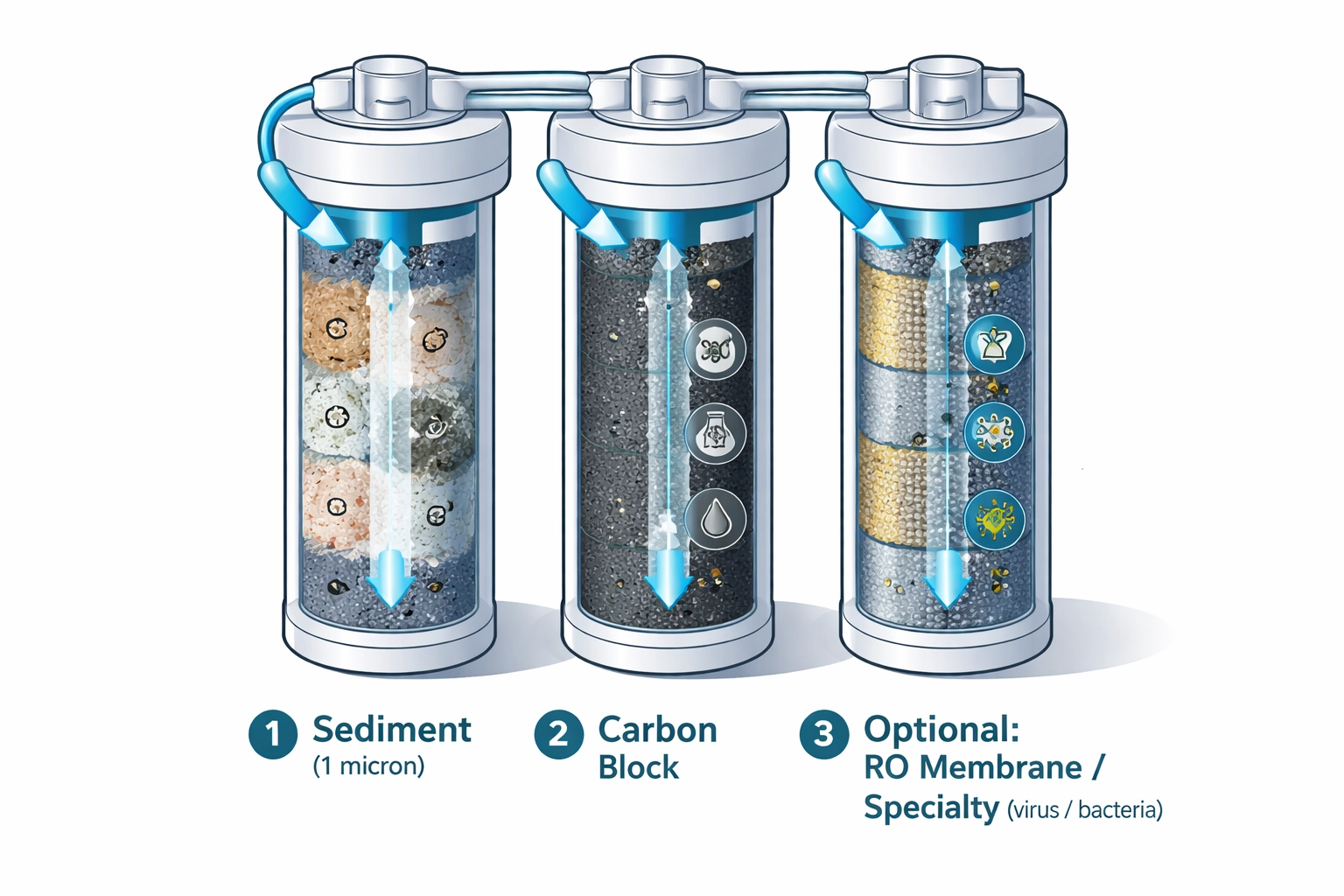
Sediment filters are your first line of defense. They catch particles like dirt, sand, rust, and debris that can enter your water supply from campground pipes or well water sources. Sediment filters are measured in microns: the lower the micron rating, the finer the particles they can trap.
A standard 1-micron sediment filter catches most visible particles and protects downstream filters from clogging too quickly.
Carbon Filtration
Carbon filters (usually activated carbon or carbon block) are the workhorses of taste and odor improvement. They absorb chlorine, volatile organic compounds (VOCs), and other chemicals that affect how your water tastes and smells.
If campground water ever tastes like a swimming pool, carbon filtration is what fixes that.
Specialized Filtration
For RVers who want to go further, specialized cartridges can target specific concerns:
- Reverse osmosis membranes remove dissolved solids, heavy metals, and many contaminants that carbon alone can't catch. Options like a 100 GPD or 150 GPD reverse osmosis membrane are popular for RVers who want near-bottled-water quality.
- Virus and bacteria filters (like our Virus Hero 0.2 Micron Filter) offer an extra layer of protection for those filling up from questionable sources.
Most under-sink systems use multiple stages: often sediment first, then carbon, then optional specialized filtration: to create a comprehensive drinking water solution.
Who Might Benefit from an Under-Sink Filter?
An under-sink system isn't necessary for everyone, but certain RVers tend to find them worthwhile. Here are some scenarios where an under-sink filter might be a good fit:
You're Concerned About Drinking Water Quality
If you've ever filled a glass from your RV faucet and thought "I'm not drinking that," an under-sink filter addresses that concern directly. It gives you a dedicated source of filtered drinking water without having to buy bottled water or haul jugs from home.
You Travel to Areas with Inconsistent Water Sources
Campground water quality varies wildly. City water connections are generally treated and predictable, but well water sources: common at smaller campgrounds, state parks, and rural areas: can have issues with minerals, sulfur smell, sediment, and more.
If your travels take you to a mix of water sources, having an under-sink filter as a backup gives you peace of mind no matter where you hook up.
You Boondock or Fill from Non-Standard Sources
Boondockers and dry campers often fill their freshwater tanks from various sources: some more trustworthy than others. An under-sink filter provides an extra layer of filtration for water that's already in your tank, regardless of where it came from.
You Already Have a Whole-RV System but Want Better Drinking Water
Maybe you've got a good inline or canister system protecting your plumbing, but you want something extra for the water you actually drink and cook with. An under-sink filter complements your existing setup rather than replacing it.
You Have Specific Health or Taste Concerns
Some RVers are sensitive to chlorine taste, have health conditions that make water quality more important, or simply prefer the taste of highly filtered water. An under-sink system with the right cartridges can address those specific needs.
Who Might Not Need One?
On the flip side, an under-sink filter might not be necessary if:
- You primarily stay at full-hookup parks with reliable city water and you're satisfied with your current inline filter's performance.
- You rarely use your RV's water system for drinking: maybe you prefer to bring bottled water or have a separate countertop pitcher filter.
- Space is at an absolute premium and you can't spare the under-sink real estate.
- You're comfortable with your whole-RV filtration and don't have taste or quality concerns with your current setup.
There's no shame in keeping things simple. Not every RV needs every piece of filtration equipment.
Practical Considerations: Space, Installation, and Flow Rate
If you're leaning toward an under-sink system, here are some practical factors to think through:
Space Under Your Sink
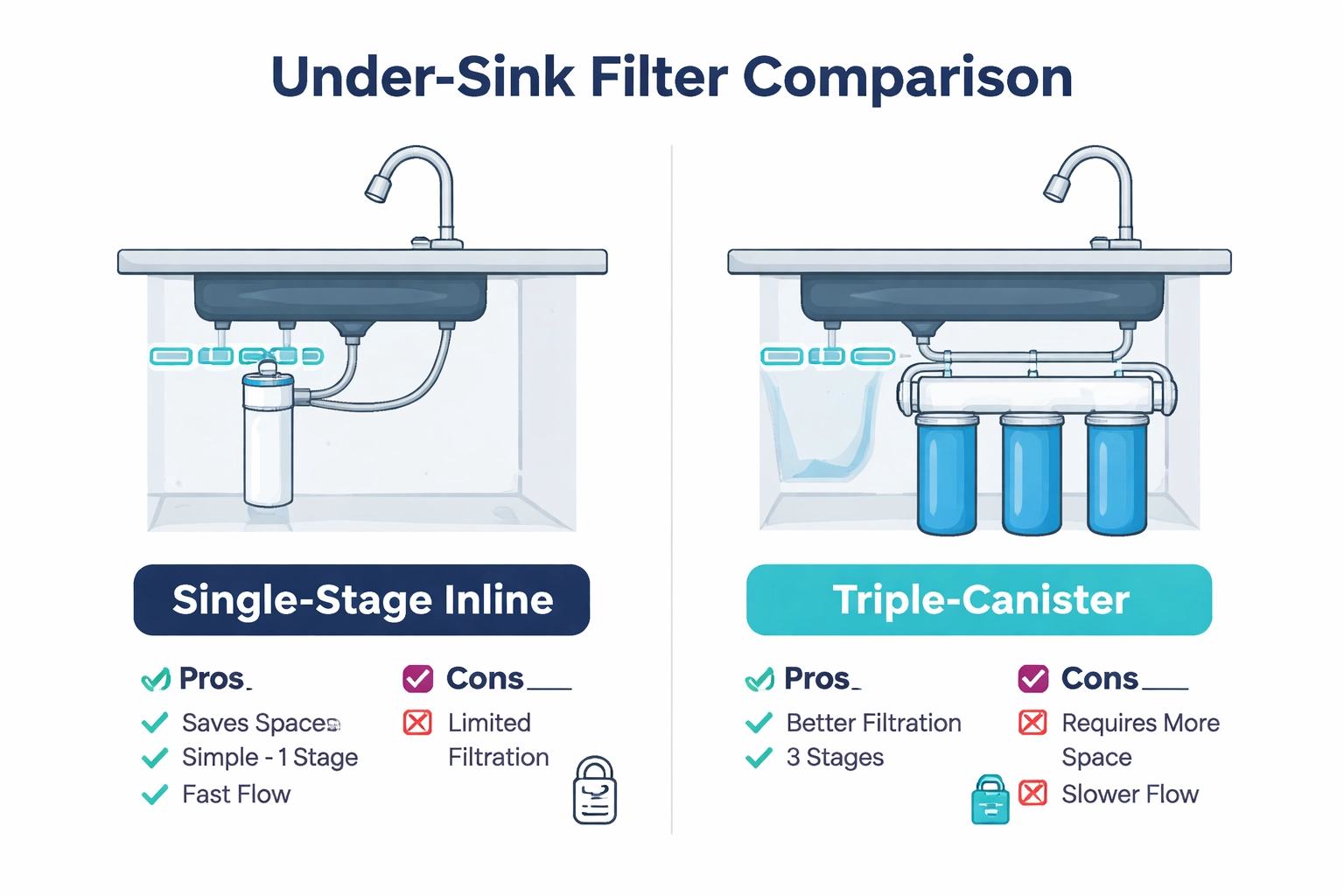
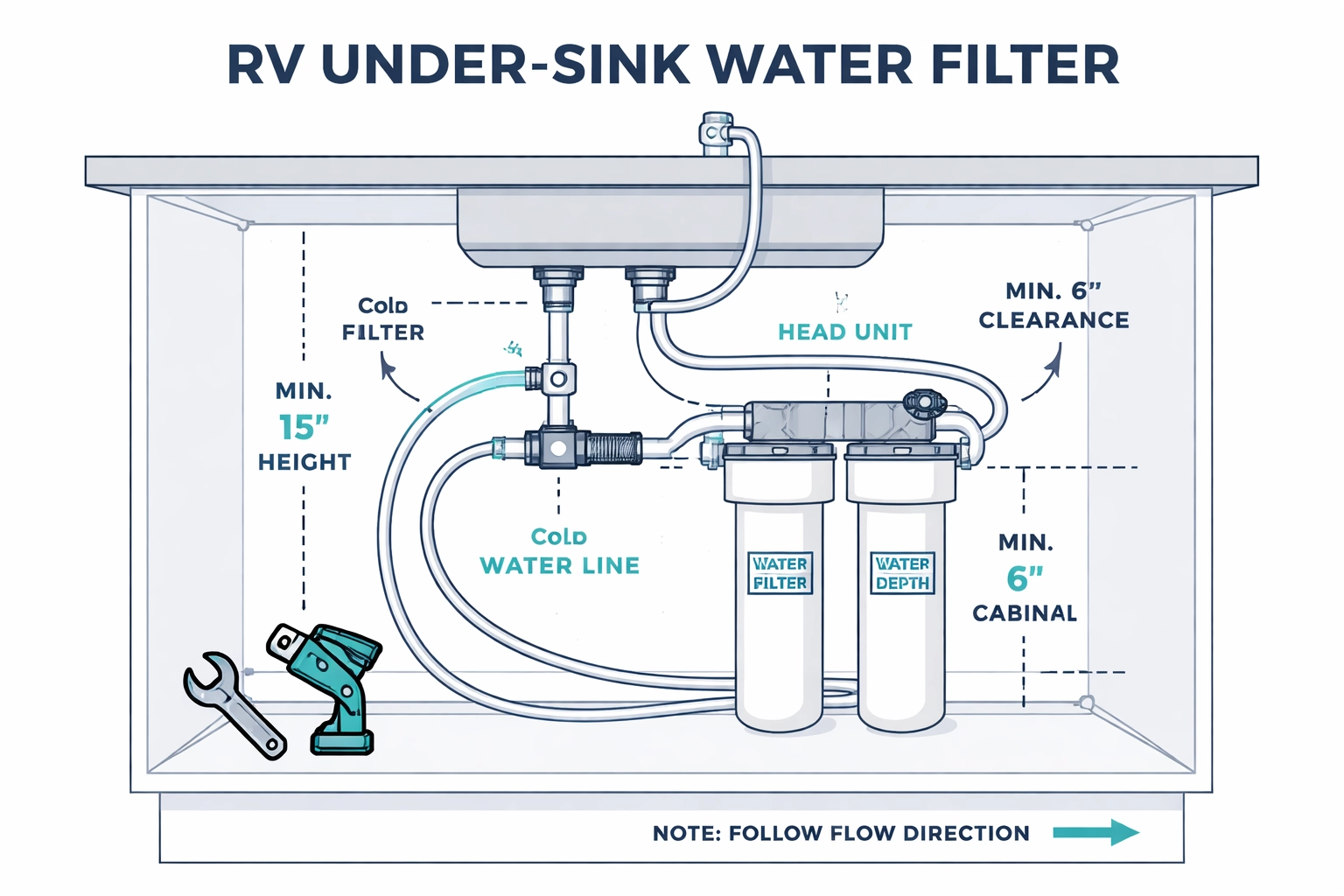
RV under-sink cabinets are notoriously cramped. Before committing to a system, measure your available space and consider what else lives under there (cleaning supplies, pipes, water pump access, etc.). Compact single-cartridge systems take up less room than multi-stage setups.
Installation Complexity
Most under-sink filters connect to your existing cold water line with basic fittings. If you're handy with RV plumbing, installation is typically straightforward. Some systems use a dedicated filtered water faucet (which requires drilling a hole in your countertop), while others connect inline to your existing faucet.
A triple canister system offers comprehensive multi-stage filtration but requires more space and installation effort than a single-stage option.
Flow Rate
Under-sink filters: especially those with reverse osmosis: have slower flow rates than your main water supply. That's by design; slower flow means more contact time with the filter media and more thorough filtration.
For most people, this isn't an issue for drinking water. But if you're expecting fire-hose pressure from your filtered tap, adjust those expectations.
Cartridge Replacement
Like any filter, under-sink cartridges need periodic replacement. Factor in the cost and frequency of cartridge changes when considering a system. The good news: dedicated drinking water filters typically last longer than inline hose filters because they're processing less total water volume.
How Your Travel Style Affects the Decision
Your RVing style plays a big role in what filtration setup makes sense:
Full-Time RVers often find under-sink filters worthwhile because they're relying on their RV's water system day in and day out. Consistent access to good drinking water becomes a quality-of-life issue over time.
Weekend Warriors who stick to familiar campgrounds with reliable water might be perfectly happy with a basic inline filter.
Boondockers and Adventure Travelers who fill from varied sources often appreciate the extra security of point-of-use filtration.
Snowbirds spending months at a time in one location might find an under-sink system convenient for daily use.
There's no single right answer: just what works for how you actually use your RV.
Our Under-Sink Solutions
At RV Water Filter Store, we carry a range of options for RVers interested in point-of-use drinking water filtration. Whether you're looking for a simple single-stage setup or a multi-stage system with reverse osmosis, we've got kits designed to fit RV spaces and travel needs.
If you're curious, explore our water filtration systems to see what might work for your rig. And if you're not sure where to start, our contact page is always open: we're happy to help you think through your options without any pressure.
The Bottom Line
Do you need an under-sink water filter for your RV? Not necessarily. Your RV will function just fine without one.
But if you want better-tasting drinking water, travel to areas with inconsistent water quality, or simply want peace of mind about what you're putting in your body, an under-sink filter is worth considering. It's a relatively affordable upgrade that can make your daily RV life a little more comfortable.
The best approach? Think honestly about your travel style, your water quality concerns, and your available space. From there, you can decide whether an under-sink system belongs in your setup: or whether your current filtration is already doing the job.
Either way, safe travels and clean water out there.


