

Adjustable vs. Fixed RV Water Pressure Regulators: Which One Actually Protects Your Pipes?
![[HERO] Adjustable vs. Fixed RV Water Pressure Regulators: Which One Actually Protects Your Pipes?](https://cdn.marblism.com/tufWQy1ms8K.webp)
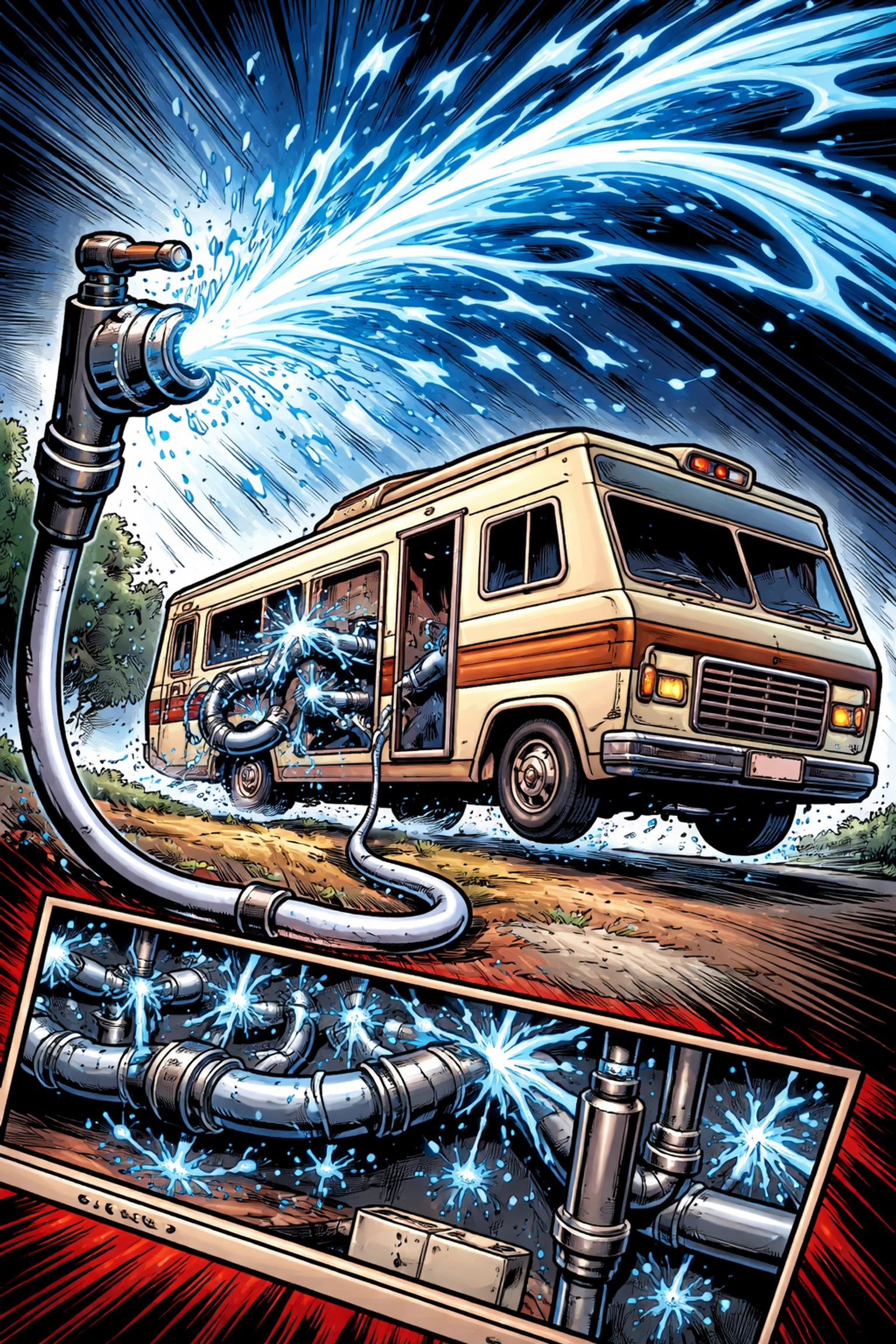
Picture this: You roll into a new campground after a long day on the road. You hook up to the city water, crank on the faucet, and, WHOOSH, water pressure that could strip paint off a barn comes blasting through your RV's plumbing.
Welcome to the Battle of the Regulators.
Your RV's pipes, fittings, and water heater aren't built to handle the kind of pressure some campgrounds dish out. We're talking 80, 90, sometimes over 100 PSI slamming into a system designed for 40-55 PSI. Without a regulator standing guard at your water hookup, you're basically rolling the dice every time you connect.
But here's where it gets interesting: not all regulators are created equal. In one corner, we've got the Fixed Regulator, the no-nonsense sidekick who shows up and does the job without asking questions. In the other corner, the Adjustable Regulator, the gadget-equipped hero who lets you call the shots.
So which one actually protects your pipes? Let's break it down.
Why Your RV Needs a Pressure Regulator (Like, Yesterday)
Before we get into the main event, let's talk about why this matters in the first place.
City water pressure varies wildly from campground to campground. One park might give you a gentle 45 PSI, while the next one hammers you with 100+ PSI. Your RV's plumbing: the fittings, the water heater, the supply lines: is typically rated for around 40-55 PSI max.
When you exceed that limit, bad things happen:
- Leaky fittings that drip into your walls
- Burst supply lines (usually at 2 AM, because of course)
- Water heater damage that costs hundreds to fix
- Faucet failures that turn a quick shower into a flood
A water pressure regulator sits between the campground spigot and your RV, acting like a bouncer at the door. It takes whatever pressure comes in and knocks it down to a safe level before it reaches your rig.
Simple concept. Big protection.
The Fixed Regulator: Your Reliable Sidekick

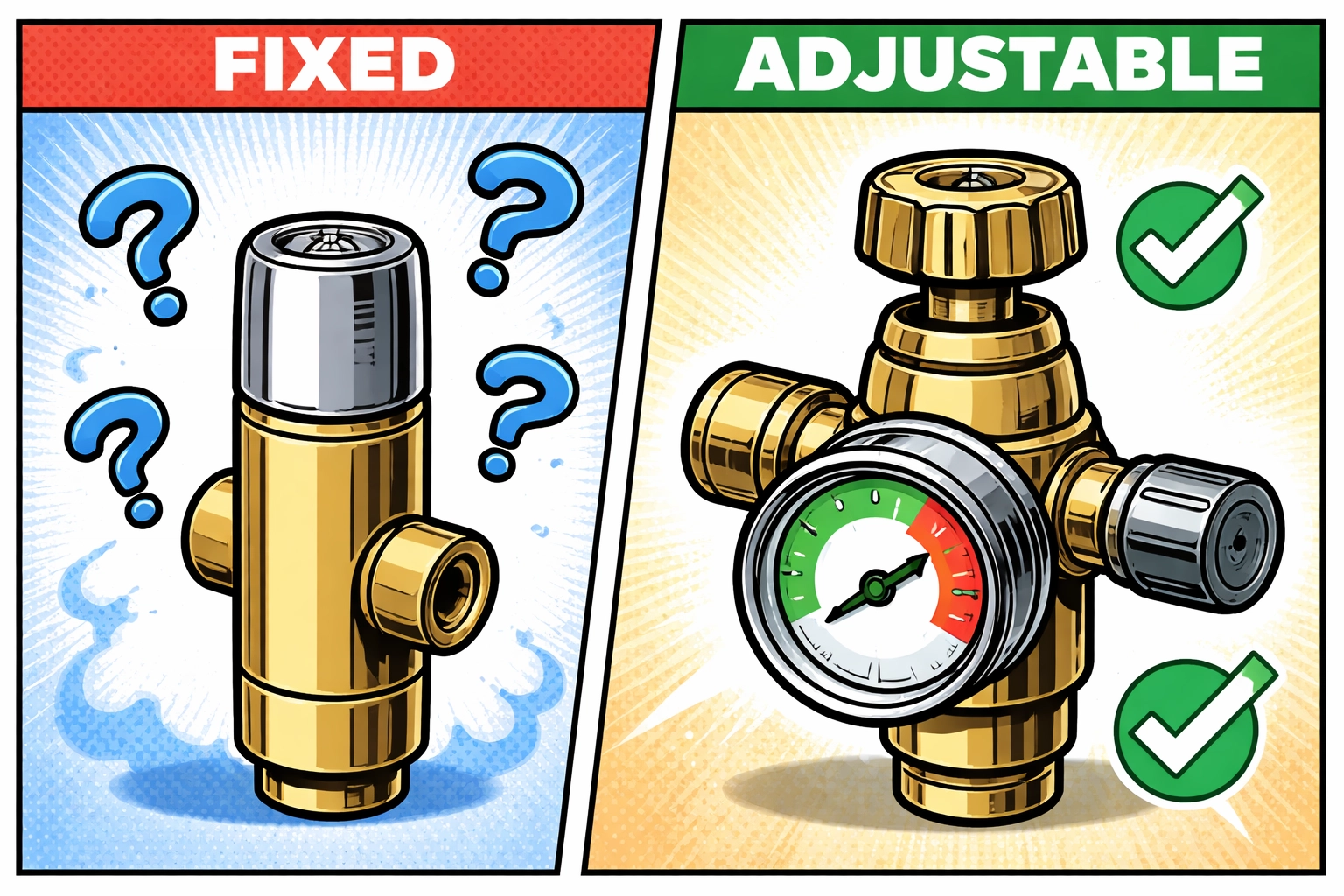
The Fixed Regulator is the strong, silent type. It's preset at the factory to deliver somewhere around 40-50 PSI, and that's exactly what it does. No knobs to turn, no gauges to read, no decisions to make.
The Good Stuff:
- Dead simple to use: just screw it on and forget it
- Typically more affordable
- Lightweight and compact
- Perfect for RVers who want zero hassle
The Not-So-Good Stuff:
- No gauge means you can't see what it's doing
- You're trusting it's working without any visual confirmation
- No way to adjust if you want slightly more or less pressure
- Usually plastic construction (less durable over time)
The fixed regulator is like that dependable friend who always shows up on time but doesn't say much. You trust them, but sometimes you wish they'd give you a little more feedback.
For weekend warriors and casual campers who stick to well-maintained campgrounds, a fixed regulator does the job just fine. It's the "set it and forget it" solution.
The Adjustable Regulator: The Hero With Gadgets

Now we're talking. The Adjustable Regulator comes equipped with a built-in pressure gauge and a set screw that lets you dial in your exact preferred pressure.
The Good Stuff:
- Built-in gauge shows you exactly what's happening
- Adjustable from roughly 0-160 PSI input range down to your preferred output
- Usually brass or metal construction (much more durable)
- You can verify it's actually working every single time
- Adjust based on your specific RV's needs
The Not-So-Good Stuff:
- Costs more upfront
- Slightly heavier and bulkier
- Requires a tiny bit of initial setup
Here's the thing about that gauge: it's not just a fancy add-on. When you can see that incoming pressure is 95 PSI and your regulator is knocking it down to 50 PSI, you have peace of mind. You know it's working.
With a fixed regulator? You're hoping. With an adjustable? You're knowing.
For full-timers, frequent travelers, or anyone who's dealt with a pressure-related plumbing disaster before, the adjustable water regulator for RV use is usually worth the extra investment.
Why "High Flow" Matters More Than You Think
Here's something that doesn't get talked about enough: flow rate.
A high flow RV water pressure regulator maintains good water volume even while reducing pressure. Cheaper regulators can choke your flow down to a trickle, leaving you with a shower that feels like someone's spitting on you from across the room.
Not ideal.
When shopping for regulators, look for ones rated at 4+ GPM (gallons per minute) at standard pressure. This ensures you get the pressure protection you need without sacrificing the actual water flow that makes showers enjoyable and dishes possible.
This is especially important if you're running multiple fixtures at once or if you have a larger RV with more demand on the water system.
So... Which One Should You Choose?
Let's make this easy with a quick breakdown:
Choose a Fixed Regulator if:
- You're a weekend or occasional camper
- You want the simplest possible solution
- Budget is a primary concern
- You stick to well-known, established campgrounds
Choose an Adjustable Regulator if:
- You travel frequently or live full-time in your RV
- You want visual confirmation that protection is working
- You camp at varied locations (boondocking, older parks, etc.)
- You've experienced pressure-related plumbing issues before
- You like having control over your systems
Neither choice is wrong. Both protect your pipes when installed correctly. It really comes down to how much visibility and control you want over your water system.
We carry both types here at RV Water Filter Store because we believe in giving you options that fit your camping style: not pushing you toward the most expensive thing on the shelf.
Quick Installation Tips
No matter which regulator you choose, here are some pro tips:
-
Always install at the spigot, not at your RV : You want to reduce pressure before it travels through your hose.
-
Use a quality drinking water hose : A good regulator paired with a sketchy hose is like putting premium fuel in a car with bald tires.
-
Check for leaks after connecting : Give everything a visual once-over before you walk away.
-
Store it properly : Don't just throw it in a wet compartment. Let it dry out to prevent mineral buildup.
-
Replace when needed : Regulators don't last forever. If you notice pressure creeping up or flow dropping significantly, it might be time for a new one.
The Bottom Line
Both fixed and adjustable regulators will protect your RV's plumbing from dangerous pressure spikes. The difference is in control and confidence.
Fixed regulators are the simple, affordable option for casual campers who want basic protection without fuss. Adjustable regulators give you the gauge, the control, and the peace of mind that comes from seeing your protection in action.
Either way, using some kind of regulator is non-negotiable. Your pipes, your wallet, and your future self will thank you.
Got questions about which setup makes sense for your rig? Drop us a line: we're always happy to help you figure it out.


