


Best RV Water Softener: 10 Things to Know Before You Buy (Plus Sizing & Setup Tips)
![[HERO] Best RV Water Softener: 10 Things to Know Before You Buy (Plus Sizing & Setup Tips)](https://cdn.marblism.com/ljuURY0jalV.webp)
Hard water is one of those sneaky RV problems that doesn't announce itself right away. You might notice your skin feels dry after showering, or there's a white film building up on your faucets. Maybe your coffee tastes a little off, or your water heater isn't performing like it used to.
That's hard water doing its thing: and if you're traveling through areas with high mineral content (looking at you, Southwest and Midwest), it's only going to get worse.
The fix? A portable RV water softener. But before you buy one, there are some things you should know. We've been helping RVers get cleaner water since 1992, so let's break down everything you need to make the right choice.
1. Hard Water Does Real Damage Over Time
Hard water contains high levels of calcium and magnesium. These minerals don't just affect taste: they build up inside your pipes, water heater, faucets, and appliances.
Over time, that scale buildup can:
- Reduce water heater efficiency
- Clog showerheads and faucets
- Leave spots on dishes and fixtures
- Make soap and shampoo less effective
- Shorten the lifespan of your RV's plumbing
A water softener removes these minerals before they enter your RV, protecting your entire water system.
2. RV Water Softeners Work Differently Than Home Units
Home water softeners are big, permanently installed, and use electricity. RV water softeners are a different animal entirely.
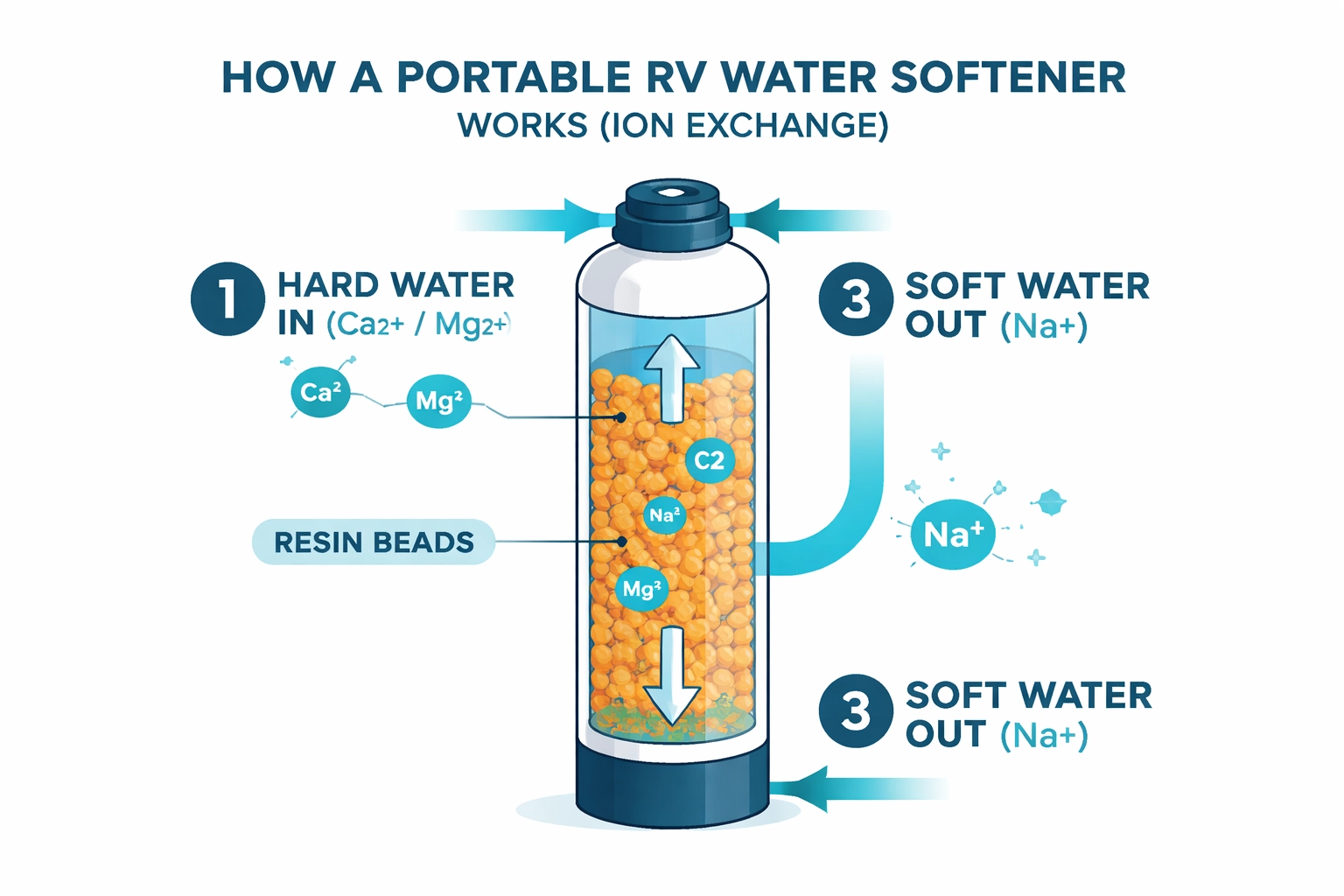
Portable RV water softeners use ion exchange resin to swap calcium and magnesium ions for sodium ions. They're compact, require no electricity, and connect inline between the campground spigot and your RV.
When the resin gets saturated with minerals, you regenerate it using common table salt. No plumber required, no complicated setup.
3. Grain Capacity Determines How Long It Lasts Between Regenerations
"Grain capacity" tells you how much hardness the softener can remove before needing regeneration. The two most common sizes for RVs are:
- 8,000-grain units – Great for solo travelers, couples, or shorter trips
- 16,000-grain units – Better for families, full-timers, or areas with very hard water
Here's a rough idea: if your water is moderately hard (around 10 grains per gallon), an 8,000-grain softener handles about 800 gallons before regeneration. A 16,000-grain unit doubles that.
If you're not sure how hard your water is, grab some water hardness test strips. They're cheap and take the guesswork out of sizing.
4. Portability Actually Matters
You're going to move this thing around. A lot. Hooking it up, storing it, regenerating it: portability isn't just a nice feature, it's essential.
Look for:
- Compact design that fits in storage compartments
- Comfortable carrying handles
- Lightweight construction (even when full)
- Standard garden hose connections for easy hookup
The best RV water softener is one you'll actually use consistently. If it's too heavy or awkward, it'll end up sitting in storage.
5. Regeneration Is Easier Than It Sounds
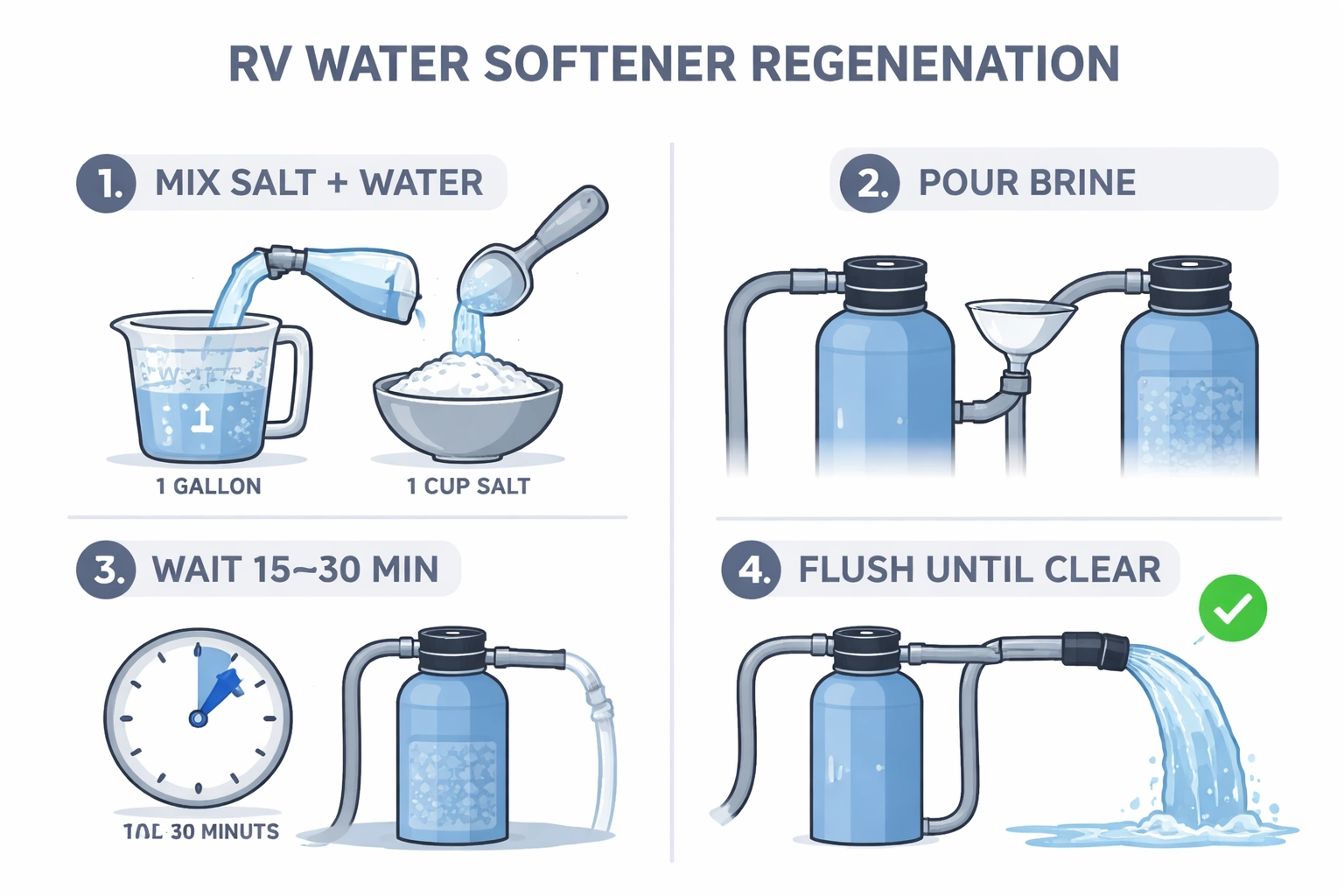
Regenerating your RV water softener sounds technical, but it's really just flushing it with salt water. Here's the basic process:
- Dissolve table salt in water (about 2 lbs per regeneration for most units)
- Pour the brine into the softener
- Let it sit for 15-30 minutes
- Flush with fresh water until the water runs clear
That's it. Most RVers do this every few weeks or monthly, depending on usage and water hardness.
Pro tip: Backflush your softener every 3 months or so by reversing the water flow for 2-5 minutes. This helps keep the resin bed in good shape and extends its lifespan.
6. A Water Softener Is Not the Same as a Water Filter
This trips up a lot of people. Water softeners and water filters do completely different jobs:
| Water Softener | Water Filter |
|---|---|
| Removes hardness minerals (calcium, magnesium) | Removes contaminants (chlorine, sediment, chemicals) |
| Protects plumbing and appliances | Improves taste and safety |
| Uses ion exchange | Uses physical filtration or carbon |
If you want clean, great-tasting water AND protection from scale buildup, you need both. Many RVers run a softener first (to protect downstream equipment), then a whole RV water filter system for contaminant removal.
7. Setup Order Matters
When combining a water softener with filtration, the order of your equipment affects performance and lifespan.
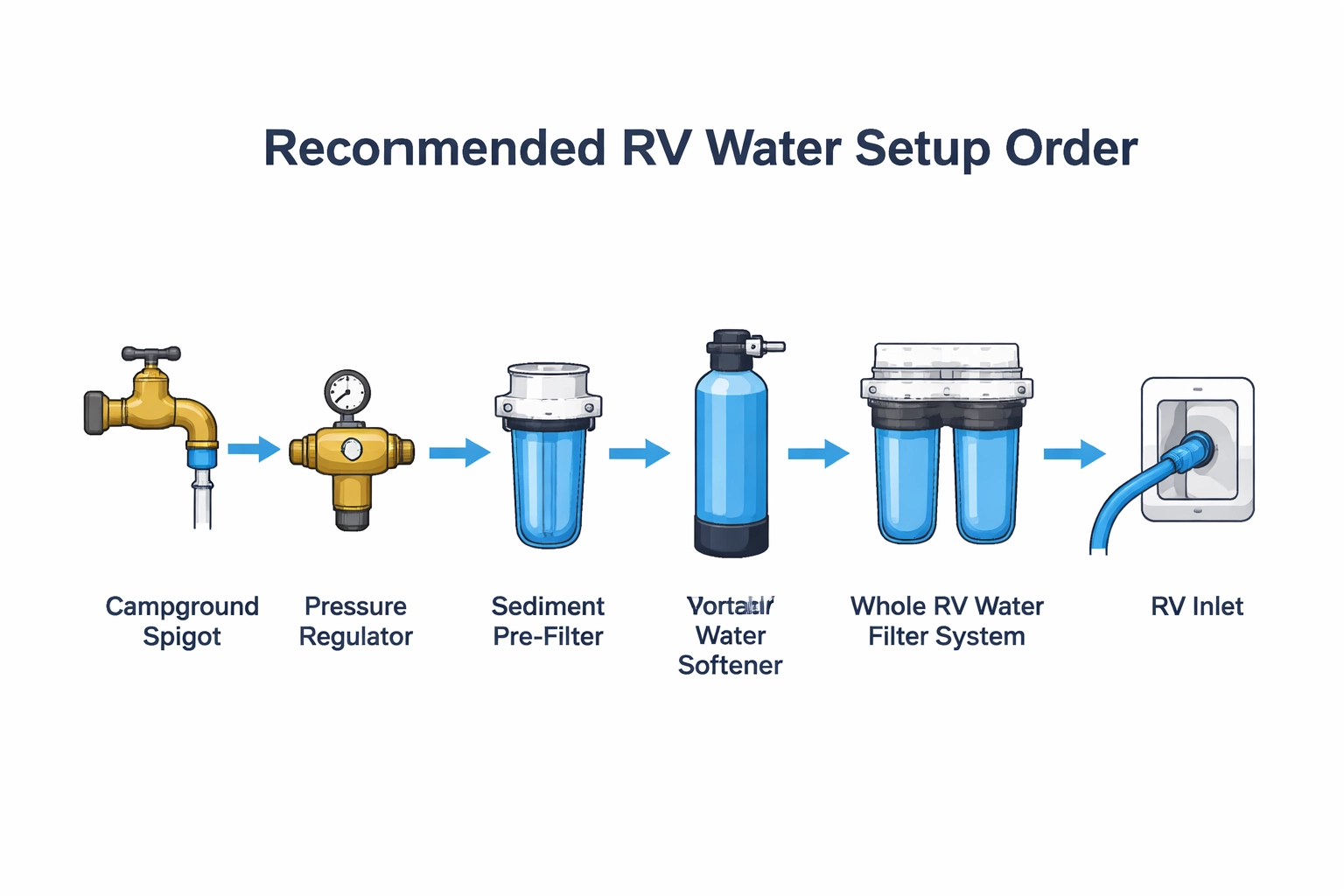
Recommended setup (from campground spigot to RV):
- Pressure regulator
- Sediment pre-filter (optional but recommended)
- Water softener
- Main water filter system
- RV inlet
This order protects your softener from sediment damage and lets your filter work with already-softened water.
8. Your Travel Style Affects Which Size You Need
Before picking a size, think honestly about how you RV:
Go with an 8,000-grain softener if you:
- Travel solo or as a couple
- Take shorter trips (weekends to a few weeks)
- Camp mostly in areas with moderate water hardness
- Want something ultra-portable
Go with a 16,000-grain softener if you:
- Travel with family or multiple people
- Full-time or take extended trips
- Frequently camp in hard water areas
- Prefer less frequent regeneration
There's no wrong answer here: it's about matching the unit to your actual usage.
9. Quality Matters More Than You Think
Cheaper water softeners often use lower-grade resin that degrades faster and requires more frequent replacement. They may also have flow rate issues that affect water pressure in your RV.
Higher-quality units typically offer:
- Better resin technology for longer life
- Optimized flow rates (no pressure drop)
- More durable tanks and fittings
- Easier regeneration process
We've seen plenty of RVers buy cheap, replace it in a season, then wish they'd invested upfront. A solid portable RV water softener should last years with proper care.
10. Combining Softening and Filtration Gives You the Best Results
For the cleanest, best-tasting water that also protects your RV's plumbing, the winning combo is:
- Water softener – Removes hardness minerals
- Whole RV filter system – Removes chlorine, sediment, chemicals, and improves taste
Our Essential, Enhanced, and Elite whole RV water filter systems pair perfectly with a portable softener. The Essential System even comes with a limited lifetime warranty, so you're covered for the long haul.
And when it's time for replacement cartridges, our Subscribe & Save program makes sure you never forget a filter change: delivered right to your door.
Quick Sizing Guide
Not sure what size you need? Here's a simple rule of thumb:
| Water Hardness | 8,000-Grain Capacity | 16,000-Grain Capacity |
|---|---|---|
| 5 GPG (soft-moderate) | ~1,600 gallons | ~3,200 gallons |
| 10 GPG (moderate) | ~800 gallons | ~1,600 gallons |
| 20 GPG (hard) | ~400 gallons | ~800 gallons |
| 30+ GPG (very hard) | ~260 gallons | ~530 gallons |
GPG = grains per gallon
Test your water at a few different campgrounds to get a sense of what you're dealing with. Hardness varies a lot by region.
Setup Tips for Best Performance
Once you've got your softener, here's how to get the most out of it:
- Always use a pressure regulator – Protects the softener (and your RV) from pressure spikes
- Regenerate before storage – Leaving saturated resin sitting can reduce its effectiveness
- Store upright – Keeps the resin bed settled properly
- Use plain table salt – No need for expensive softener salt; regular non-iodized table salt works great
- Flush after regeneration – Run fresh water through until it tastes normal before reconnecting to your RV
Ready to Stop Hard Water Problems?
Hard water might seem like a minor annoyance, but the long-term damage adds up. A quality RV water softener protects your investment and makes daily life on the road more comfortable.
We've been helping RVers solve water problems since 1992. If you have questions about sizing, setup, or pairing a softener with filtration, reach out to us: we're happy to help.
And don't forget: free shipping on orders to the contiguous 48 states. No reason not to get started.


