

Under-Sink vs. External RV Water Filters: Which One Wins for Your Lifestyle?
![[HERO] Under-Sink vs. External RV Water Filters: Which One Wins for Your Lifestyle?](https://cdn.marblism.com/t5c3QUEo7aM.webp)
You've probably been there: standing in a campground, hose in hand, wondering if that water is actually safe to drink. Maybe you've tasted that funky chlorine tang or noticed a weird smell coming from your faucet. Either way, you know you need an RV filter: but now comes the real question.
Do you go with an external filter that treats everything before it hits your rig? Or do you install an RV under sink water filter that gives you pristine drinking water right at the tap?
Here's the honest truth: there's no single "winner" here. The best choice depends entirely on how you travel, how much space you have, and what you're trying to protect. Let's break it down so you can figure out which setup actually fits your lifestyle.
The "Hookup Life": External RV Water Filters
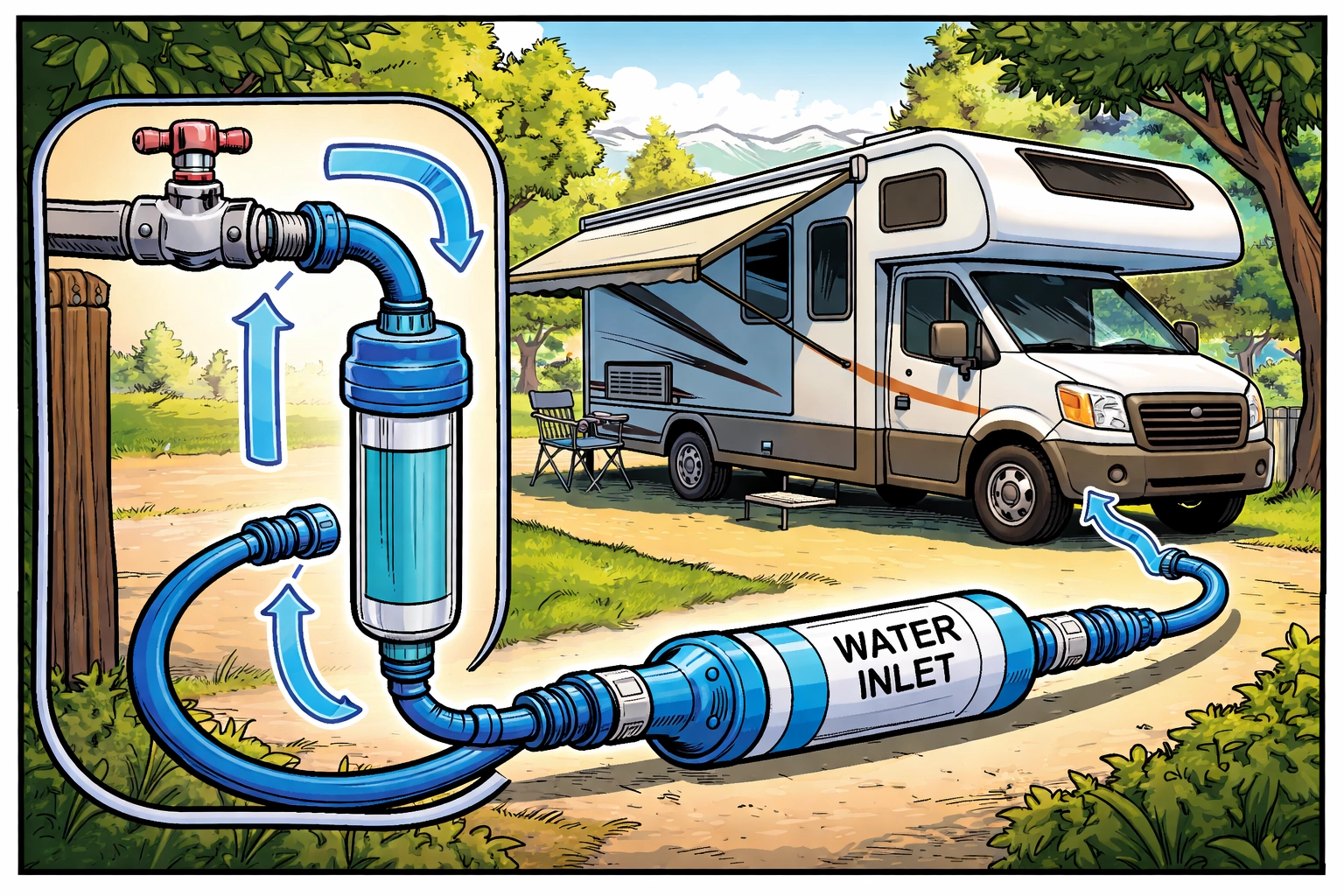
External filters (also called inline filters) are the classic choice for RVers who want simple, no-fuss protection. These connect between the campground spigot and your RV's water inlet, filtering every drop of water before it enters your system.
Why RVers Love External Filters
Easy setup, zero commitment. You don't need to drill holes or sacrifice cabinet space. Just screw it onto the hose, connect to your rig, and you're good to go. When it's time to hit the road, disconnect and toss it in a storage bay.
Whole-RV protection. Every faucet, showerhead, and toilet gets filtered water. That means less sediment buildup in your pipes, water heater, and fixtures. Your plumbing will thank you.
Budget-friendly entry point. External filters are generally more affordable upfront, making them a great starting point for weekend warriors and casual campers.
The Trade-Offs
External systems handle sediment, chlorine taste, and odors pretty well, but they're not designed for deep filtration. If you're dealing with seriously questionable water or want to remove things like heavy metals, lead, or bacteria, a basic inline filter might not cut it.
Flow rate can also be an issue. Some external filters slow down your water pressure, which is annoying when you're trying to fill a pot or take a shower.
Best for: Part-time RVers, weekend campers, and anyone who wants simple protection without permanent installation.
The "Kitchen Sink" Solution: Under-Sink RV Water Filters
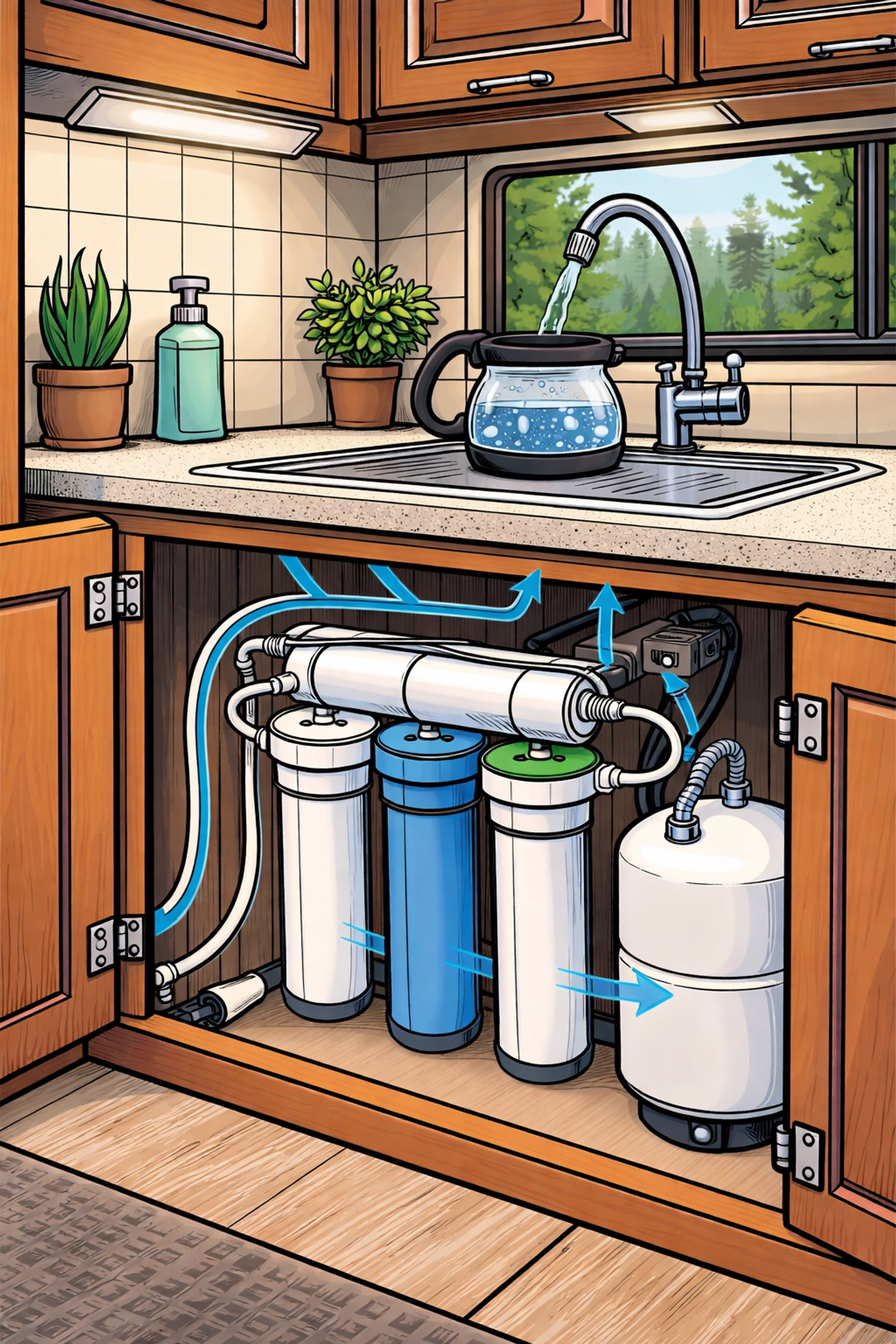
If your main concern is what goes into your coffee pot, cooking water, and drinking glass, an RV under sink water filter is where it's at. These systems install underneath your kitchen sink (hence the name) and typically filter water at a single dedicated faucet.
Why RVers Love Under-Sink Systems
Superior filtration for what matters most. Under-sink systems often use multi-stage filtration: sometimes including reverse osmosis: that can remove up to 99.99% of contaminants like chlorine, lead, nitrates, and even arsenic. That's a huge upgrade from basic inline filters.
Out of sight, out of mind. Once installed, the system hides in your cabinet and does its job quietly. No wrestling with hoses at every campsite.
Perfect for full-timers. If you're living on the road, you're drinking a lot more water than the occasional weekend camper. Investing in quality drinking water filtration makes sense when it's your primary home.
The Trade-Offs
Installation requires a bit more effort. You'll need some cabinet space and possibly a separate faucet (or a diverter valve). It's not complicated, but it's more involved than screwing on an external filter.
The other thing? Under-sink systems only filter at that one point. Your shower, toilet, and other faucets still get unfiltered water unless you pair it with something else.
Best for: Full-time RVers, families who prioritize drinking water quality, and anyone who wants that "fresh from the spring" taste every time.
Side-by-Side Comparison: External vs. Under-Sink
| Feature | External Filter | Under-Sink Filter |
|---|---|---|
| Installation | None required: connects to hose | Requires cabinet space and minor plumbing |
| Coverage | All water entering the RV | Single faucet (typically kitchen) |
| Filtration Level | Basic to moderate (sediment, chlorine, taste) | Advanced multi-stage (heavy metals, bacteria, chemicals) |
| Flow Rate | Can reduce pressure | Generally maintains good flow |
| Ideal For | Weekend campers, part-timers | Full-timers, families, health-conscious travelers |
| Upfront Cost | Lower | Moderate to higher |
| Maintenance | Seasonal cartridge swaps | Cartridge replacement every 6-12 months |
Maintenance Comparison: How Often Are You Swapping Cartridges?
Let's talk about the ongoing commitment, because nobody wants to be that person who forgets to change their RV water filter cartridge and ends up with funky-tasting water.
External Filters
Most external inline filters need replacement every camping season or after a certain number of gallons (usually around 2,000-3,000 gallons). If you're a weekend warrior, you might get a full season out of one cartridge. Full-timers will go through them faster.
The good news? Replacement cartridges are affordable and easy to swap. No tools required: just unscrew, replace, and reconnect.
Under-Sink Filters
Under-sink systems typically use replaceable RV water filter cartridges that last anywhere from 6 to 12 months, depending on usage and water quality. Multi-stage systems may have different cartridges with different lifespans, so keep track of when each one needs attention.
The cartridges cost a bit more than basic inline replacements, but you're getting significantly better filtration in return. Most people find it's a worthwhile trade-off for clean, great-tasting drinking water.
Pro tip: Set a reminder on your phone or calendar. It's easy to forget about filters when they're working perfectly: until they're not.
Space Savings: What Works for Your Rig?
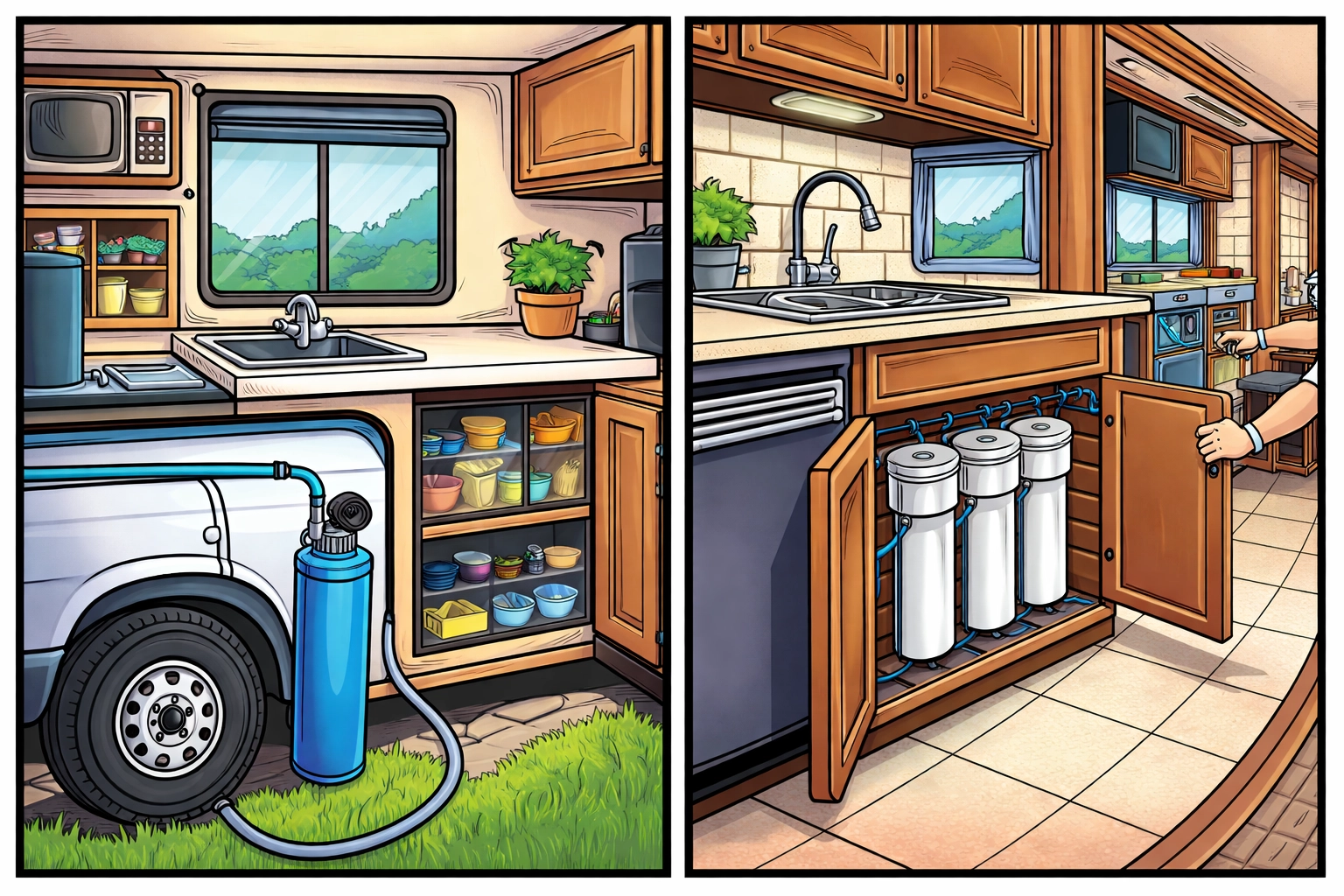
If you're rolling in a compact camper van or teardrop trailer, cabinet space is precious real estate. An under-sink system might eat into storage you can't afford to lose.
External filters win here for small rigs. They live outside your living space entirely, leaving your cabinets free for pots, pans, and snacks.
On the flip side, larger Class A motorhomes and fifth wheels usually have plenty of under-sink room. For families traveling in bigger rigs, an under-sink system makes a lot of sense: especially when you've got multiple people drinking, cooking, and making coffee throughout the day.
The "Hybrid" Setup: Why Many Travelers Use Both
Here's a little secret from experienced full-timers: you don't have to choose just one.
Many RVers run a combination setup:
- External filter for whole-RV protection (showers, toilets, washing dishes)
- Under-sink filter for drinking and cooking water
This layered approach gives you the best of both worlds. Your pipes and fixtures stay protected from sediment and chlorine, while your drinking water gets the deep, multi-stage treatment it deserves.
Think of it like this: the external filter handles the heavy lifting and basic protection, while the under-sink system delivers that final polish for anything going into your body.
Is it more expensive upfront? Sure. But for full-timers or anyone who camps frequently in areas with questionable water quality, this combo provides peace of mind you can actually taste.
So, Which One Wins?
It depends on you.
-
Weekend warriors and casual campers: Start with a quality external RV filter. It's simple, affordable, and protects your whole system.
-
Full-timers and health-focused travelers: An RV under sink water filter is worth the investment for superior drinking water quality.
-
Families and frequent travelers: Consider the hybrid approach: external for whole-RV protection, under-sink for drinking and cooking.
No matter which route you choose, the important thing is that you're taking water quality seriously. Your taste buds, your plumbing, and your long-term health will all thank you.
Ready to find the right setup for your rig? Check out our water filtration systems to explore your options, or swing by our FAQs page if you've got questions. We're always happy to help you find the perfect fit for your RV lifestyle.


