


Sediment vs. Carbon: What's Actually Inside Your Cartridge?
![[HERO] Sediment vs. Carbon: What's Actually Inside Your Cartridge?](https://cdn.marblism.com/zi7JtgY_5aU.webp)
Ever held a fresh RV water filter cartridge in your hand and wondered what's actually going on inside that cylinder? You're not alone. Most of us just screw them in, enjoy cleaner water, and call it a day. But understanding what's inside your cartridge can help you make smarter choices about your filtration setup: and figure out why that water tastes funky when it's time for a replacement.
Let's crack open the mystery and take a look at the two main players in the filtration game: sediment and carbon.
The Dynamic Duo of Water Filtration
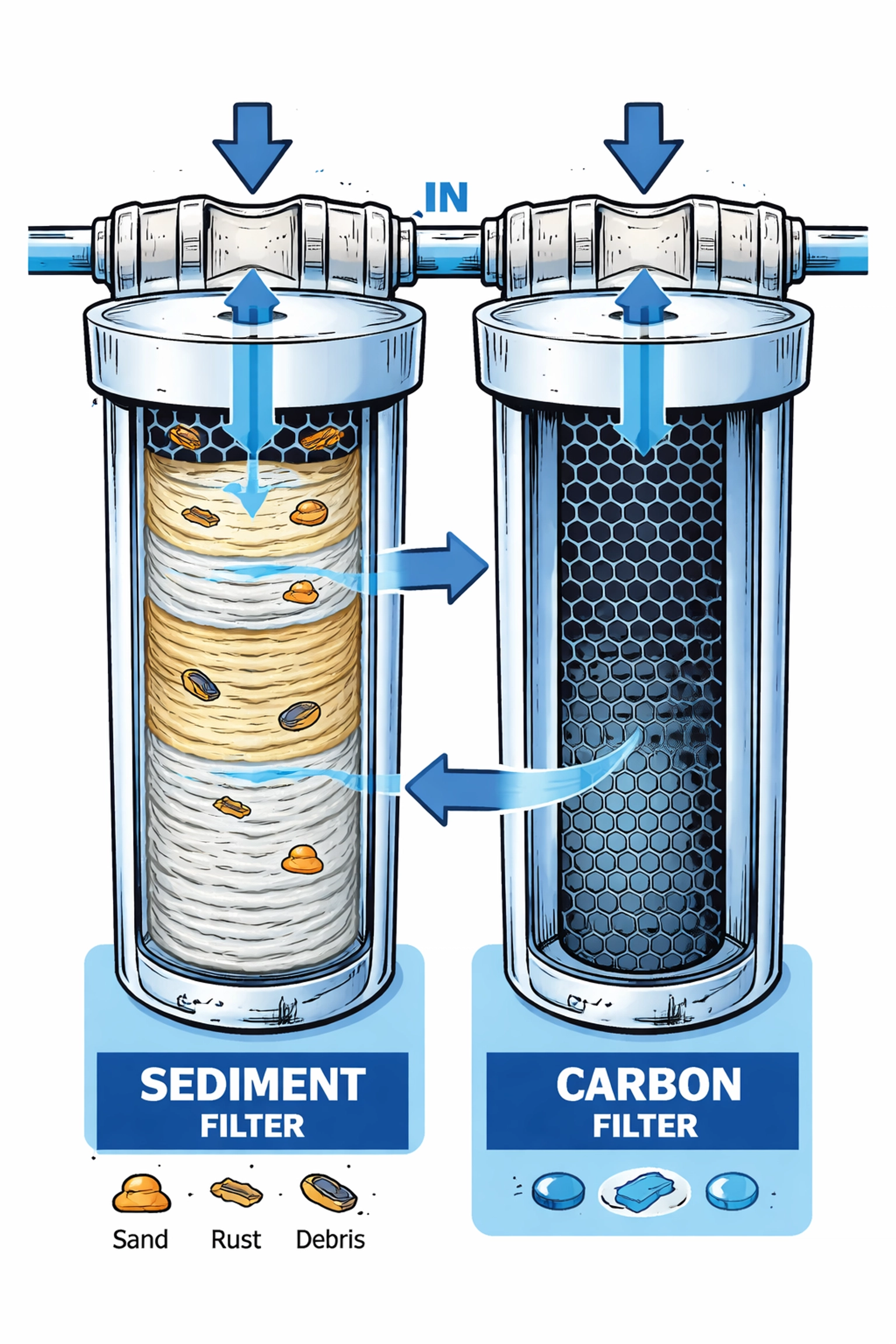
Think of your RV water filter cartridge as a tag team. Sediment filters handle the "big stuff": the visible gunk you definitely don't want in your coffee. Carbon filters tackle the invisible troublemakers: the chemicals, chlorine, and weird tastes that make campground water less than appetizing.
Each one has a specific job, and when they work together? That's when the magic happens.
Sediment Filters: The Bouncers at the Door
Sediment filters are your first line of defense. Their job is simple but crucial: stop particles from getting through.
We're talking about:
- Sand and silt
- Rust flakes
- Scale buildup
- Dirt and debris
These filters use mechanical filtration, which is a fancy way of saying they physically trap particles as water passes through. No chemistry involved: just good old-fashioned straining.
What's Inside a Sediment Cartridge?
Most sediment cartridges are made from one of these materials:
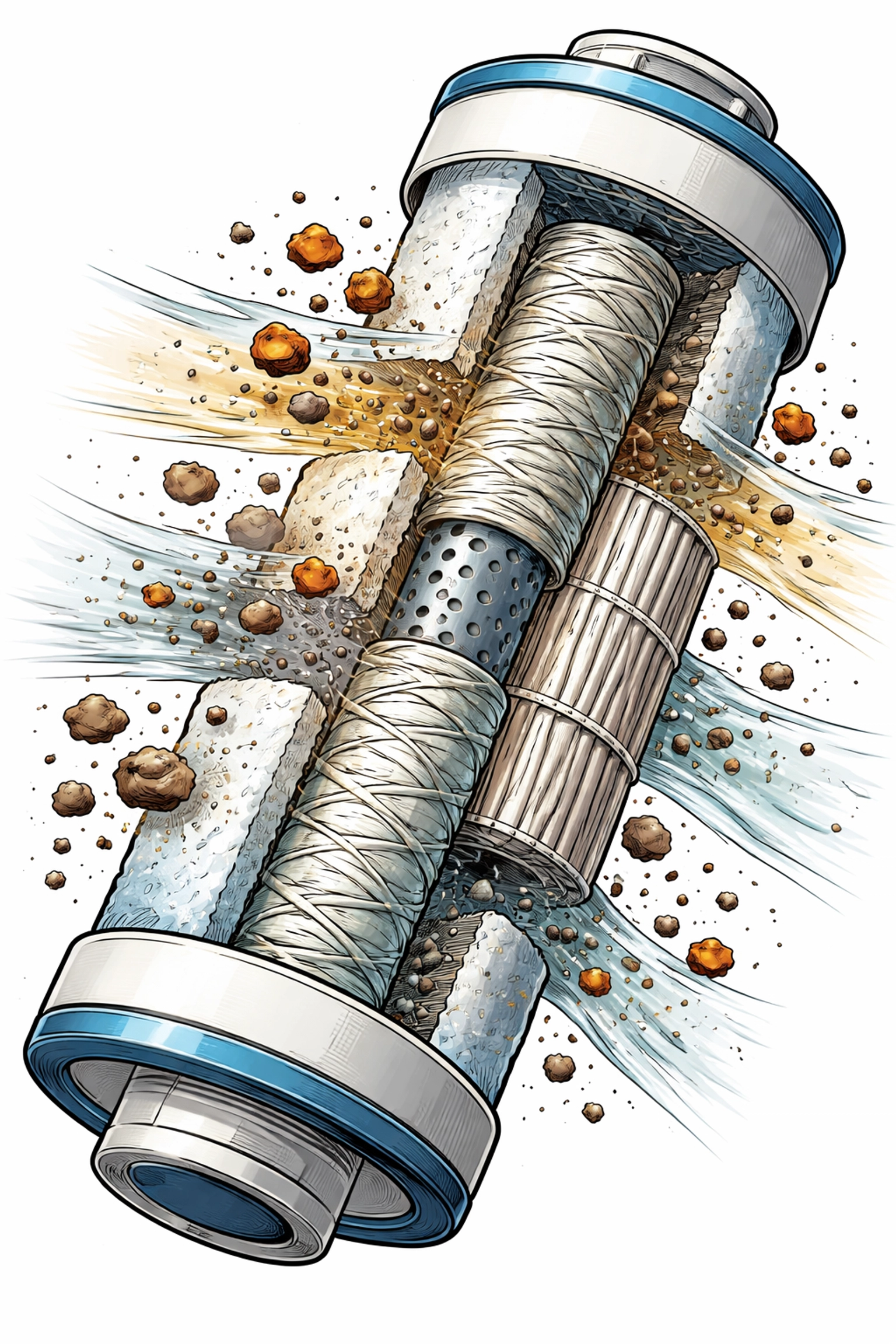
Spun Polypropylene: This is the most common type you'll see. The material is spun into a dense, fibrous matrix that traps particles throughout its depth. Think of it like a really thick coffee filter.
String-Wound Filters: These are made by wrapping fibers tightly around a core. The varying tightness creates different "zones" that catch particles of different sizes.
Pleated Filters: These have a larger surface area thanks to their accordion-like folds. They're great for higher flow rates and tend to last longer before clogging.
The Micron Rating Matters
Every sediment filter has a micron rating: that's the size of the smallest particle it can catch. Common ratings range from 50 microns (catching larger debris) down to 0.2 microns (catching almost everything visible).
For RV use, a 5-micron sediment filter hits the sweet spot for most travelers. It catches the stuff that would otherwise clog up your carbon filter or damage your plumbing, without restricting water flow too much.
Important note: Sediment filters don't remove chemicals, chlorine, or dissolved contaminants. They're purely mechanical. That's where carbon comes in.
Carbon Filters: The Chemistry Crew
If sediment filters are the bouncers, carbon filters are the detectives. They work on a molecular level to remove the stuff you can't see: but can definitely taste and smell.
What's Inside a Carbon Cartridge?
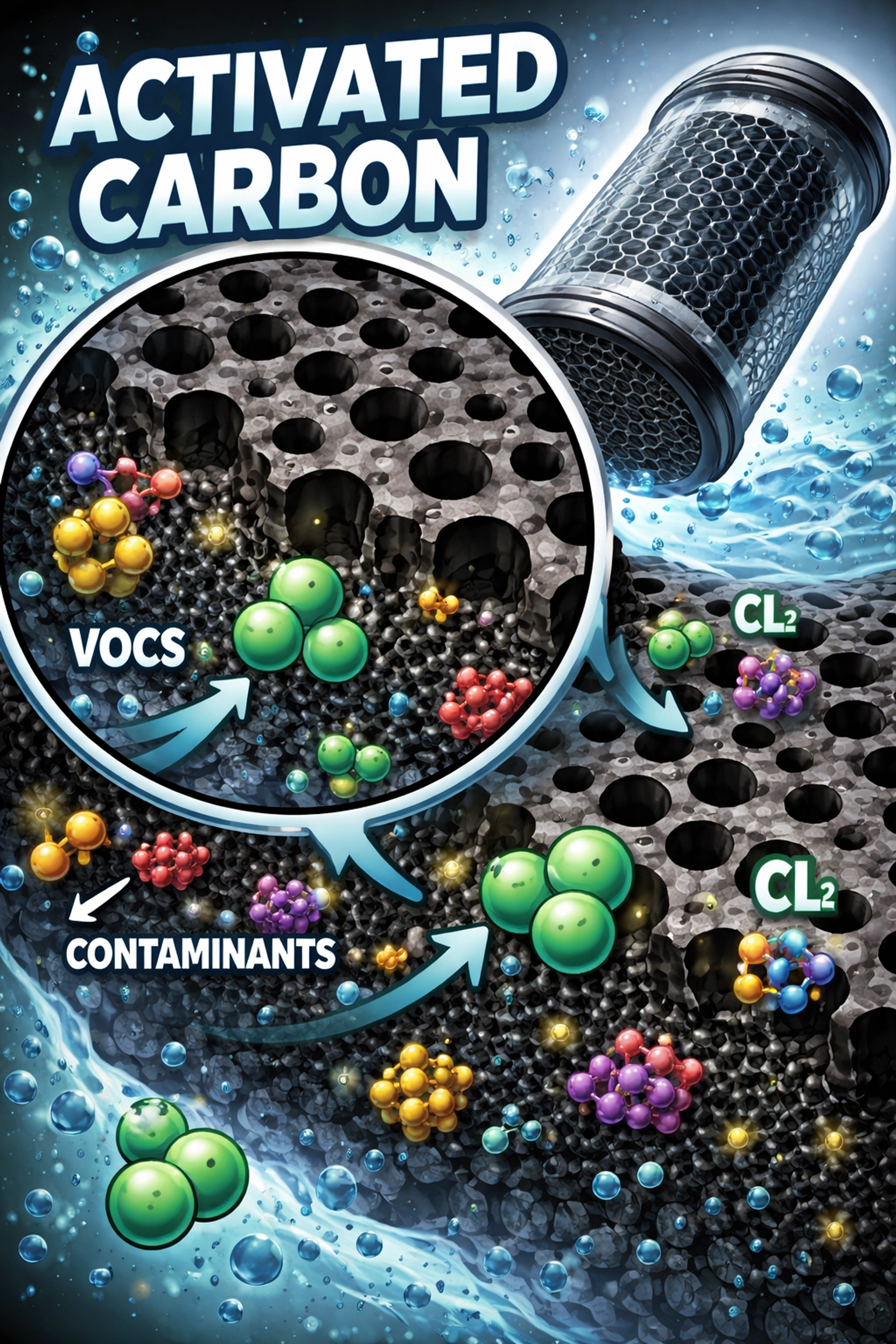
The star of the show is activated carbon. This isn't just regular charcoal from your campfire. Activated carbon is processed at extremely high temperatures with specific gases, creating millions of tiny pores throughout its structure. Those pores dramatically increase the surface area.
How much surface area are we talking about? A single gram of activated carbon can have a surface area of over 3,000 square meters. That's about half a football field: in something smaller than a sugar cube.
How Carbon Filtration Works
Carbon filters use three main processes:
Adsorption: This is the big one. Dissolved pollutants literally stick to the porous surface of the carbon as water flows through. It's like a molecular magnet for contaminants.
Chemisorption: Some contaminants chemically bond with the carbon, locking them in place permanently.
Catalytic Reduction: Certain carbon types can break down chlorine and chloramines through chemical reactions.
GAC vs. Carbon Block
You'll see two main types of carbon in RV water filter cartridges:
Granular Activated Carbon (GAC): Loose grains of carbon that water flows around. Higher flow rate, but less contact time between water and carbon.
Solid Carbon Block: Compressed, finely-ground carbon (7 to 19 times finer than GAC). This offers greater surface area, more contact time, and can filter down to 0.5 microns. The trade-off? Slightly slower flow rates.
Carbon filters are your go-to for removing:
- Chlorine and chloramines
- Volatile organic compounds (VOCs)
- Unpleasant tastes and odors
- Some heavy metals like lead
How Our Essential, Enhanced, and Elite Systems Use Both
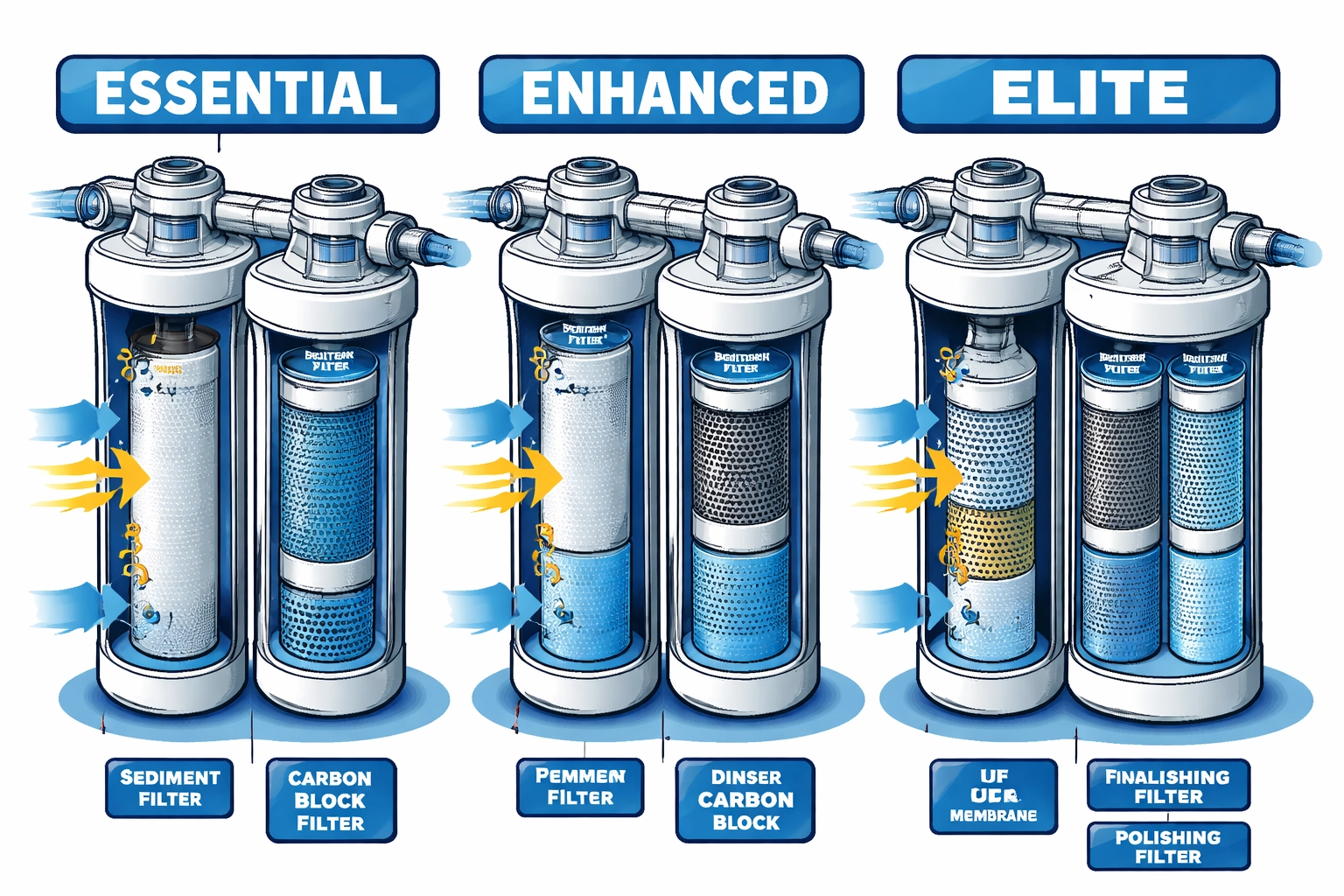
At RV Water Filter Store, we've designed our filtration systems to take full advantage of the sediment-carbon combo.
Essential System
The Essential system provides solid baseline protection with a quality sediment and carbon setup. It's perfect for RVers who travel to campgrounds with generally decent water quality but want that extra peace of mind. The cartridges handle the common culprits: chlorine taste, sediment, and basic contaminants.
Enhanced System
Stepping up to Enhanced gives you improved filtration capacity and longer cartridge life. The carbon block in this system offers finer filtration, catching smaller particles and providing more contact time for chemical removal. Great for full-timers or those who frequently encounter questionable water sources.
Elite System
The Elite system is the full package. Multiple filtration stages work together to tackle everything from heavy sediment to chloramines to trace chemicals. If you're serious about water quality: or you've got sensitive plumbing systems you want to protect: this is the way to go.
Not sure which system fits your travel style? Check out our full comparison of water filtration systems to find your match.
Why Order Matters: Sediment First, Carbon Second
Here's a pro tip that'll save you money and headaches: always run sediment filtration before carbon filtration.
Why? Because carbon filters are more expensive and do the "fine" work. If you send dirty, sediment-heavy water straight to your carbon filter, those particles will clog up the pores that should be grabbing chemicals and chlorine. Your carbon filter will die young, and your water quality will suffer.
A proper two-stage setup lets the sediment filter take the hit first. It catches all the gunk, protecting your carbon filter so it can focus on what it does best: making your water taste great.
Signs Your Cartridge Needs Replacing
Both sediment and carbon filters have a lifespan. Here's how to tell when it's time for fresh filter cartridges:
Sediment Filter Red Flags:
- Noticeably reduced water pressure
- Visible discoloration of the cartridge
- You've hit the gallon limit (check your cartridge specs)
Carbon Filter Red Flags:
- Chlorine taste or smell returning
- "Off" taste in your water
- It's been 3-6 months of regular use
When in doubt, swap them out. Fresh cartridges are cheap insurance for clean water.
The Bottom Line
Your RV water filter cartridge is doing a lot more work than you might think. Sediment filters physically block the particles that would otherwise end up in your glass (or clog your plumbing). Carbon filters chemically grab the dissolved nasties that affect taste, smell, and your health.
Together, they're the reason campground water can taste like the good stuff from home.
Now that you know what's happening inside those cylinders, you'll have a better appreciation for why fresh cartridges matter: and why matching the right filtration system to your travel style makes all the difference.
Happy travels, and drink up!


