


Adjustable vs. High Flow RV Water Pressure Regulators: Which Is Better for Your Rig?
![[HERO] Adjustable vs. High Flow RV Water Pressure Regulators: Which Is Better for Your Rig?](https://cdn.marblism.com/1HlwBuHwli6.webp)
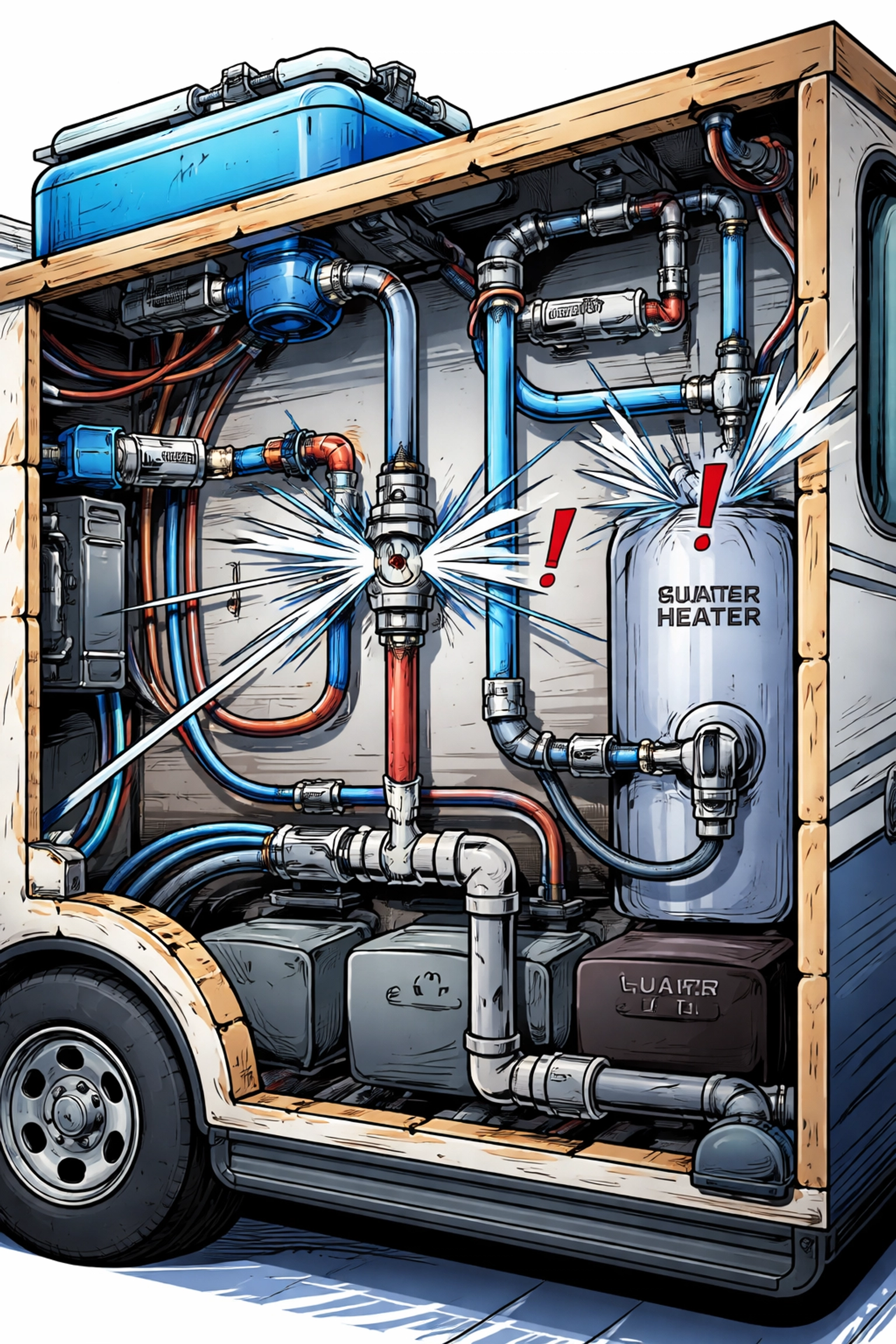
You've finally pulled into that perfect campsite after a long drive. The view is incredible, the weather is perfect, and you're ready to settle in for a relaxing week. You hook up to the city water connection, turn on the faucet, and... disaster strikes.
Maybe it's a burst fitting under your sink. Maybe it's water spraying from a connection you didn't even know existed. Either way, your trip just took a very expensive turn.
The culprit? Unregulated water pressure.
If you've been RVing for a while, you probably already know that an RV water pressure regulator is one of those non-negotiable accessories. But here's where it gets interesting: not all regulators are created equal. The two main contenders: adjustable regulators and high flow regulators: each have their own strengths and weaknesses.
Let's break down which one actually makes sense for your rig.
Why Water Pressure Regulation Is Non-Negotiable
Here's the deal: campground water pressure is wildly unpredictable. Some parks run at a gentle 30 psi. Others can spike up to 100 psi or more. Your RV's plumbing system? It's typically designed to handle somewhere between 40-50 psi.
When you connect directly to a city water hookup without a regulator, you're essentially gambling with your plumbing every single time. High pressure can cause:
- Burst water lines (especially in older rigs)
- Failed fittings and connections
- Damage to your water heater
- Leaking faucets and toilet valves
- Premature wear on your water filtration system
A single plumbing failure can cost hundreds (or thousands) of dollars to repair: not to mention the hassle of dealing with water damage in your living space. A quality RV water pressure regulator costs a fraction of that and takes about 10 seconds to install.
The Adjustable Regulator: Precision Control at Your Fingertips
Adjustable regulators are exactly what they sound like: they let you dial in your preferred pressure setting rather than being locked to a fixed number.
The Pros
Fine-tuned control. Most adjustable models let you set your pressure anywhere from about 25 psi up to 65 psi. This means you can match your regulator to your specific RV's needs and the conditions at each campground.
Flexibility across different situations. Some campgrounds have notoriously low pressure to begin with. With an adjustable regulator, you can open things up a bit when you need to, rather than making a weak flow even weaker.
Conservative protection. If you want to stay well under that 50 psi threshold (maybe you have an older rig or you're just cautious), you can lock it in at 40 psi and call it a day.
The Cons
Slightly bulkier. Adjustable regulators tend to be a bit larger than their fixed counterparts, which can make storage a minor annoyance.
Higher cost. You'll typically pay a bit more for the adjustability feature: though we're talking maybe $10-20 more, not a fortune.
Flow rate trade-off. Standard adjustable models typically deliver around 9-9.2 gallons per minute. That's perfectly adequate for most RV needs, but it's not the maximum you can get.
A popular option in this category is the Camco 40055, which offers solid performance at a reasonable price point and is widely considered a reliable workhorse.
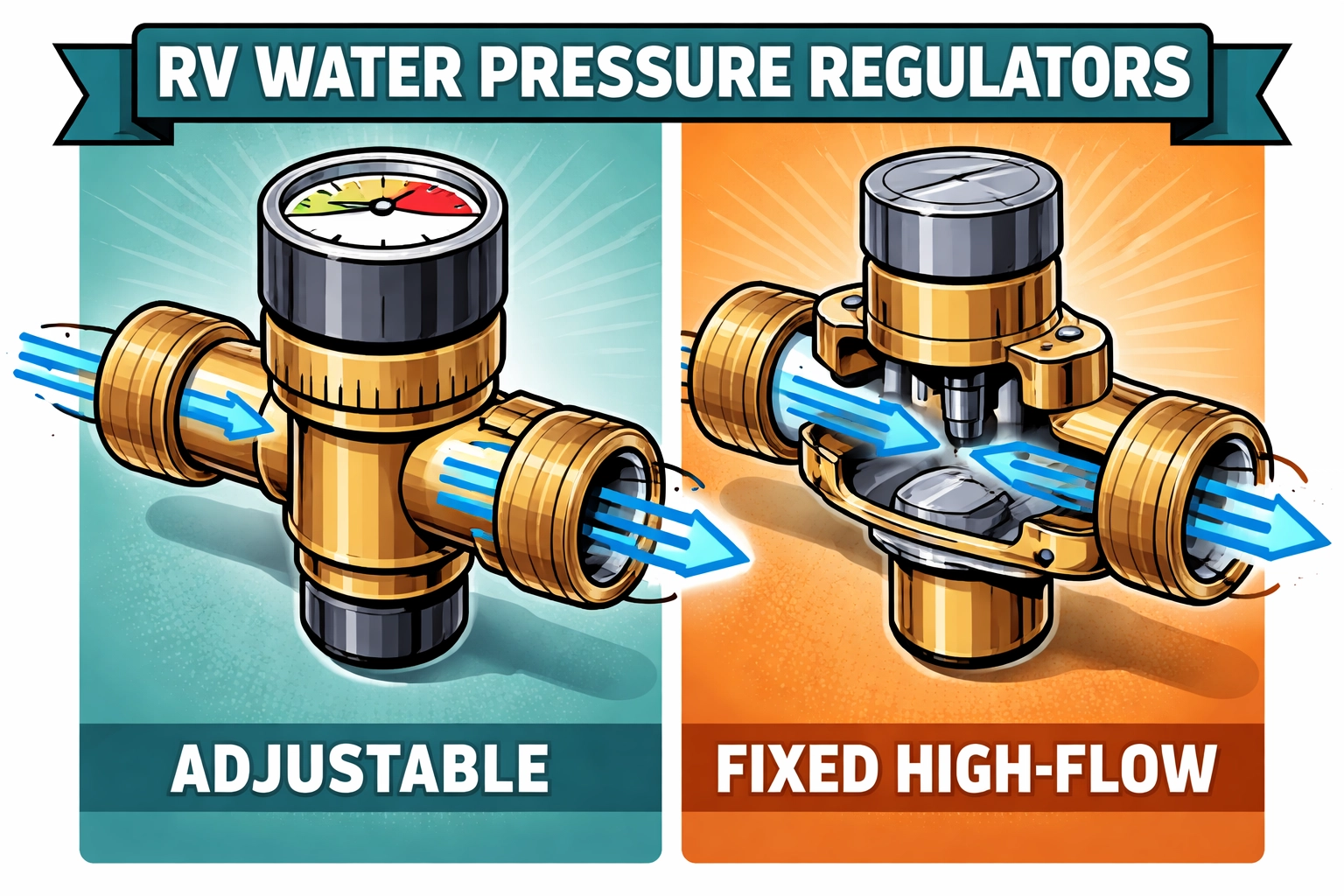
The High Flow Regulator: Maximum Water Delivery
High flow RV regulators are designed with one goal in mind: getting you the most water volume possible while still keeping pressure in a safe range.
The Pros
Better shower pressure. Testing has shown that high flow models like the Valterra High Flow Stainless can deliver approximately 10.4 gallons per minute: about 14% more flow than standard brass regulators. If weak shower pressure has been the bane of your RV existence, this is worth considering.
Simplicity. Most high flow regulators are fixed-pressure models, meaning there's nothing to adjust. Screw it on and forget about it.
Great for filter systems. More flow means your water filtration system can work more efficiently without creating unnecessary back-pressure.
The Cons
Slightly higher regulated pressure. Here's the catch: high flow models often regulate to a slightly higher pressure to achieve that improved flow. Some test around 52 psi, which is just above the commonly recommended 50 psi maximum. For most modern RVs, this is totally fine. For older rigs with questionable plumbing, it might be cutting it close.
No customization. You get what you get. If you want to drop the pressure lower for a specific situation, you're out of luck.
How Pressure Affects Your Water Filtration System
Here's something a lot of RVers don't think about: your water pressure directly impacts your filtration system's performance and lifespan.
Whether you're running our Essential, Enhanced, or Elite system, the filter cartridges inside are designed to work within a certain pressure range. Too much pressure can:
- Force water through the media too quickly, reducing contact time and filtration effectiveness
- Stress the filter housings, potentially causing leaks at the connections
- Shorten cartridge lifespan by pushing sediment deeper into the media faster
On the flip side, too little pressure can make your filtered water flow painfully slow: especially if you're running multiple stages of filtration.
The sweet spot for most RV water filter systems is that 40-50 psi range. A good regulator ensures your system gets consistent, predictable pressure regardless of what the campground throws at you.
If you want to dive deeper into the basics of pressure regulation, check out our post on RV Water Pressure Regulator Basics.
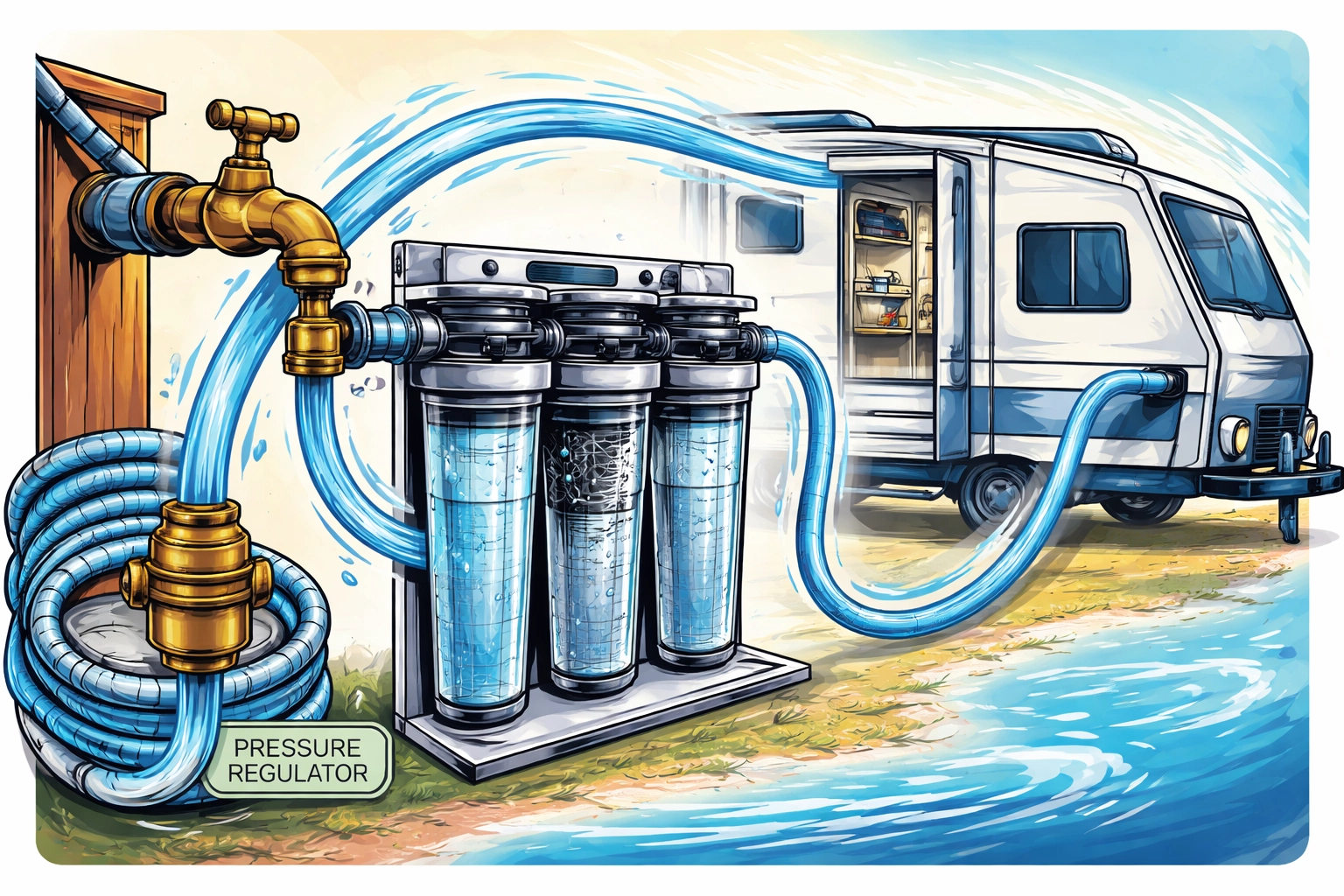
Which Regulator Is Right for Your Rig?
Let's cut to the chase with some straightforward recommendations:
Choose an Adjustable Regulator If:
- You have an older RV with plumbing that's seen better days
- You're cautious by nature and want to keep pressure well below 50 psi
- You frequently camp at parks with varying water quality and pressure
- You want maximum flexibility for different situations
Choose a High Flow Regulator If:
- You have a newer RV with modern plumbing rated for 50+ psi
- Weak shower pressure drives you crazy
- Simplicity is your jam: no adjustments, no fuss
- You're running a quality filtration system and want optimal flow through your filters
The Best of Both Worlds?
Some RVers actually carry both. They use the high flow regulator at well-maintained parks with known good pressure, and switch to the adjustable model at sketchy campgrounds or when staying at older facilities. It's a bit of overkill, but if you've got the storage space, it's not a bad strategy.
Material Matters Too
Regardless of which style you choose, pay attention to construction:
- Brass is durable and common, but make sure it's lead-free (most modern RV regulators are, but double-check)
- Stainless steel eliminates any lead concerns entirely and tends to be more corrosion-resistant
Either material will serve you well for years if you take basic care of it: mainly just storing it properly and not dropping it on concrete repeatedly.
The Bottom Line
Both adjustable and high flow RV water pressure regulators will protect your rig from pressure spikes. The question is really about what you prioritize:
Precision and flexibility? Go adjustable.
Maximum flow and simplicity? Go high flow.
Either way, you're making a smart investment in protecting your RV's plumbing: and your water filtration system. And that means more time enjoying your travels and less time dealing with soggy carpet and emergency repairs.
Got questions about how a regulator fits into your overall water setup? Drop us a line: we're always happy to help you figure out the best configuration for your rig.


