


RV Water Softener vs. Whole-RV Water Filter: Which One Do You Actually Need?
![[HERO] RV Water Softener vs. Whole-RV Water Filter: Which One Do You Actually Need?](https://cdn.marblism.com/_czFKAGoSIf.webp)
Here's a question we get all the time: "Do I need a water softener or a water filter for my RV?" And honestly? It's a great question because these two systems get mixed up constantly, even by experienced RVers.
The short answer is that they do completely different jobs. One cleans your water. The other protects your plumbing. And depending on where you camp and what's coming out of the spigot, you might need one, the other, or both.
Let's break it down so you can figure out exactly what your rig needs.
The Core Difference: Cleaning vs. Protecting
Think of it this way: a water filter is like a security guard for your health. A water softener is like a bodyguard for your RV's plumbing and fixtures.
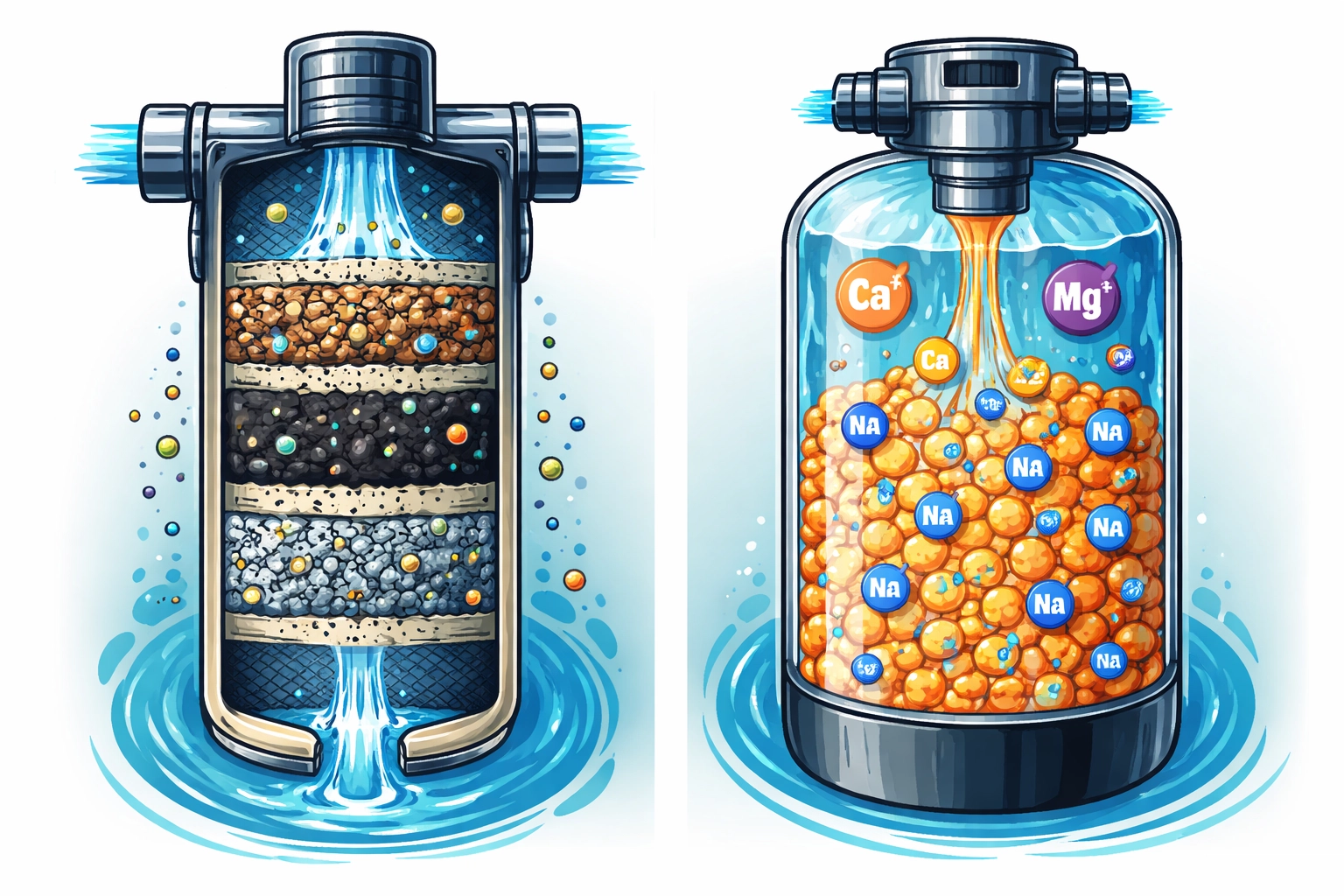
Water filters physically remove contaminants from your water. We're talking sediment, chlorine, bacteria, pesticides, and that funky campground taste that makes you question your life choices. Filters use materials like activated carbon, sediment screens, and sometimes even sub-micron membranes to trap the bad stuff before it reaches your faucet.
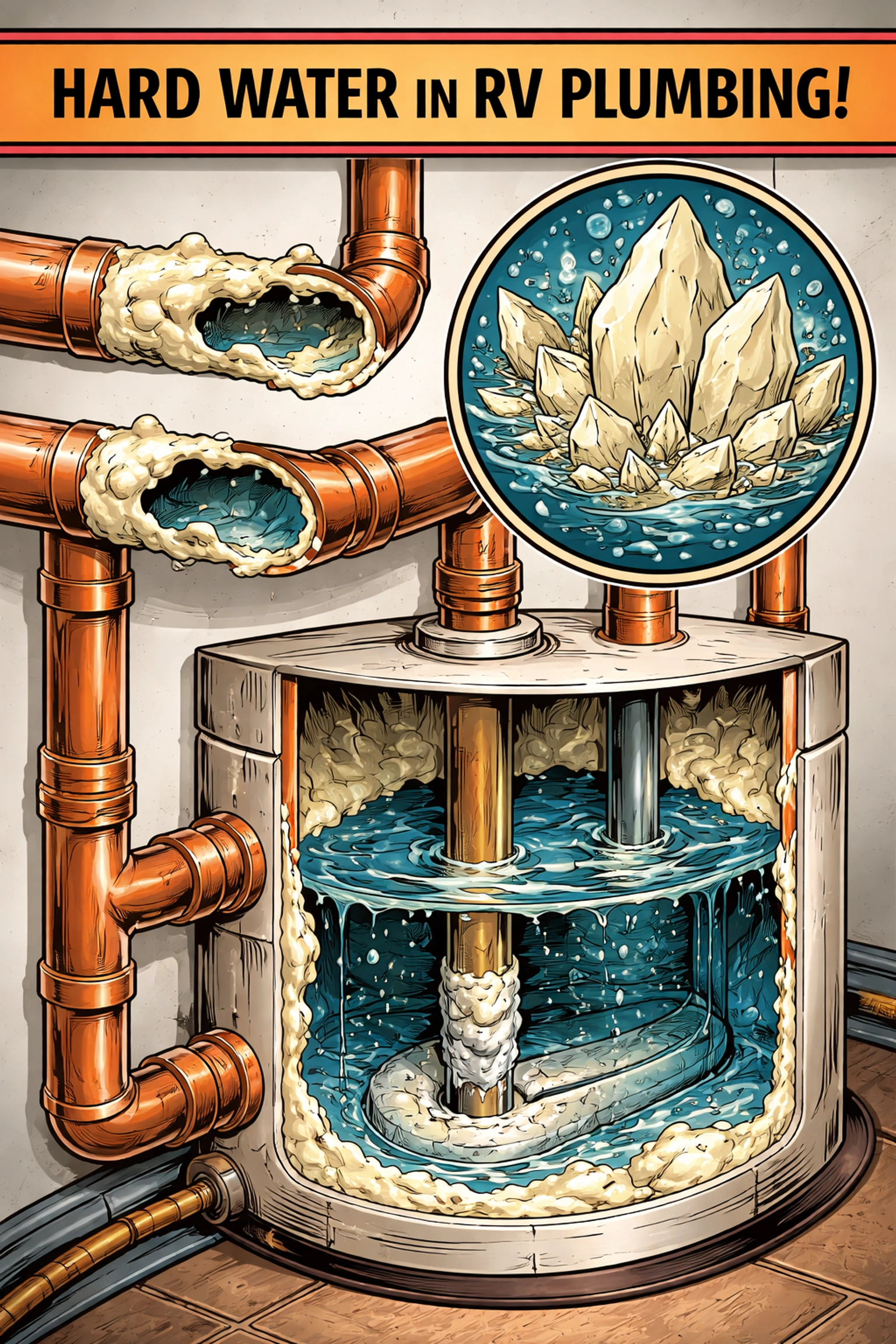
Water softeners tackle a different problem entirely: hard water minerals. Calcium and magnesium might sound harmless (they're actually in your vitamins), but when they build up inside your water heater, pipes, and fixtures? That's when you get scale deposits, reduced water flow, and eventually some expensive repairs.
Here's the kicker: a water softener won't remove bacteria or make your water safer to drink. And a water filter won't stop hard water from gunking up your plumbing. They're teammates, not substitutes.
What RV Water Filters Actually Do
Since you're hooking up to different water sources every time you move your rig, filtration becomes pretty important. That crystal-clear water at the campground might look fine, but it could be carrying:
- Sediment and rust from old pipes
- Chlorine (great for killing bacteria, terrible for taste)
- Bacteria and microorganisms from older or poorly maintained systems
- Chemical contaminants like pesticides or herbicides
- Heavy metals depending on the region
A solid filtration system acts as your first line of defense. Water passes through various filter stages, usually starting with sediment removal, then moving through activated carbon to handle chemicals and taste issues.
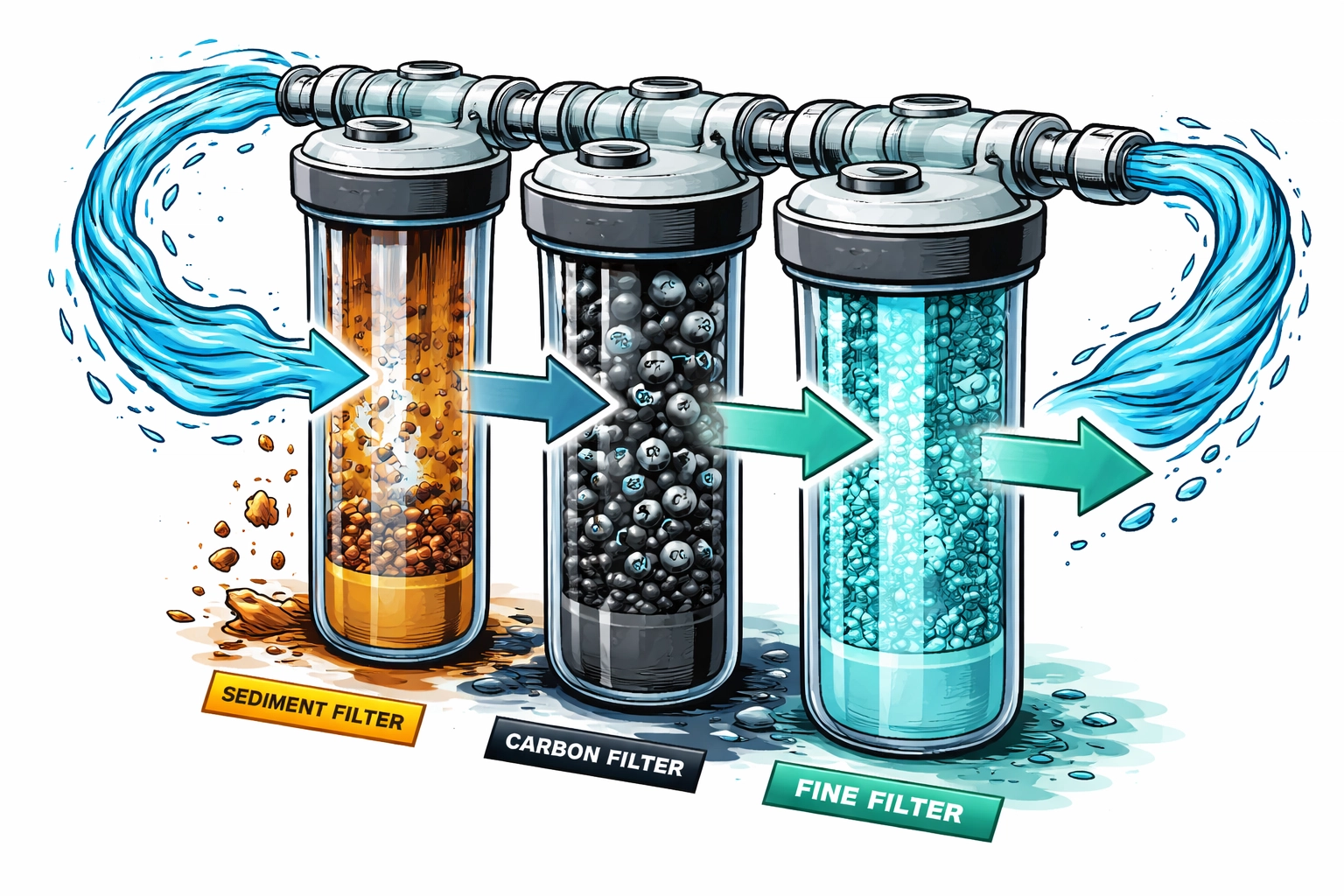
The more stages you have, the more comprehensive your protection. Basic setups handle sediment and chlorine. More advanced systems can tackle bacteria, viruses, and even sub-micron particles that cheaper filters miss entirely.
Filter System Tiers: Essential, Enhanced, and Elite
Not all RV water filter systems are created equal. Here's a quick rundown of how different tiers stack up:
Essential Systems cover the basics. They typically include sediment filtration and carbon filtration to handle taste, odor, and chlorine. Perfect if you're mostly staying at well-maintained campgrounds with decent municipal water.
Enhanced Systems step things up with additional filtration stages. You'll often see tighter micron ratings (meaning they catch smaller particles) and better chemical reduction. These are solid choices for full-timers or anyone who camps in areas with questionable water quality.
Elite Systems go all-out. We're talking multi-canister setups with specialized cartridges, sub-micron filtration, and sometimes even UV treatment. If you're concerned about bacteria, viruses, or you just want the cleanest water possible, this is where you look.
The right choice depends on your travel style and how much you trust the water sources you'll encounter.
What RV Water Softeners Actually Do
Now let's talk about the other side of the equation. Hard water is one of those sneaky problems that doesn't seem like a big deal, until it is.
When water contains high levels of calcium and magnesium, those minerals don't just disappear when the water heats up or evaporates. They leave deposits behind. Over time, you'll notice:
- White, crusty buildup on faucets and showerheads
- Spots on dishes that won't wipe off
- Reduced water heater efficiency (scale acts as insulation, making it work harder)
- Clogged aerators and reduced water pressure
- Dry skin and dull hair after showering
Water softeners solve this through a process called ion exchange. Inside the softener tank, there are thousands of tiny resin beads. As hard water flows through, calcium and magnesium ions swap places with sodium ions on the beads. The result? Soft water that won't leave scale behind.
Softener Capacity: 8,000 vs. 16,000 Grain
Softeners are rated by "grains", basically how much hardness they can remove before needing regeneration (a fancy word for recharging the resin with salt).
8,000-grain softeners are compact and lightweight. They're great for weekend warriors or couples who don't use massive amounts of water. You'll regenerate more often, but the smaller size is easier to store and transport.
16,000-grain softeners like the Essential RV Portable Water Softener give you more capacity between regenerations. If you're a full-timer, have a larger family, or camp in areas with extremely hard water, the extra capacity means less hassle.
Quick tip: Regenerating a portable RV softener is simple. You just run a salt solution through it (table salt works fine), and the resin beads are ready to go again.
So Which One Do You Need? Real-World Scenarios
Let's get practical. Here are some common situations and what makes sense for each:
Scenario 1: Weekend camping at established RV parks You're mostly using municipal water that's already treated. A basic or enhanced filter system handles taste and sediment issues nicely. A softener is optional unless you notice hard water symptoms.
Scenario 2: Full-timing across the Southwest Arizona, New Mexico, Nevada, this region is notorious for hard water. You'll definitely want a softener to protect your plumbing, plus a quality filter system because water sources vary wildly in quality.
Scenario 3: Boondocking with tank water If you're filling your tank from various sources (some sketchier than others), prioritize filtration. An enhanced or elite filter system gives you peace of mind. Softening is less critical since you're using less water overall.
Scenario 4: Staying put at a seasonal site You're hooked up to the same water source for months. Test the water or ask about hardness levels. If it's hard, definitely get a softener. Pair it with a filter system appropriate for the water quality.
The Complete Solution: Using Both Together
Here's the thing, if you want truly great water in your RV, combining both systems gives you the best of both worlds. Your filter handles the health and taste stuff. Your softener handles the plumbing protection stuff.
The setup is straightforward: softener first, then filter. Why? Softened water actually helps your filter cartridges last longer because there's less mineral content to deal with.
For most RVers who travel regularly and want to protect both their health and their investment, running both systems makes a lot of sense. Your morning coffee tastes better, your showers feel better, and your water heater isn't slowly filling with scale.
The Bottom Line
Water filters and water softeners aren't an either/or decision, they solve different problems. Filters remove contaminants and make your water safe and taste great. Softeners remove minerals and protect your RV's plumbing from scale buildup.
Assess your travel style, the regions you visit, and what issues you've noticed with your water. Some folks do fine with just a quality filter system. Others need a softener to combat brutal hard water. And plenty of RVers run both because, well, why compromise?
Whatever you choose, taking control of your water quality is one of the smartest upgrades you can make for life on the road.


